
Delivering AI advantage for the nation—from concept to operational deployment

Johns Hopkins APL is maximizing the power of artificial intelligence (AI) and autonomy to tackle critical challenges in areas across national security, space exploration, and warfighter health and readiness. For more than six decades, APL has pioneered AI research and development across autonomous systems, decision support tools, machine learning algorithms, and human-machine teaming. We develop, test, and validate AI technologies before transitioning them to operational environments, ensuring systems perform reliably when it matters most.
From autonomous systems in all domains to human-machine teaming for enhanced planning and operations to AI-enabled scientific discovery, APL is applying AI for accelerated operations and discovery that is both assured and trustworthy.
Featured Facility
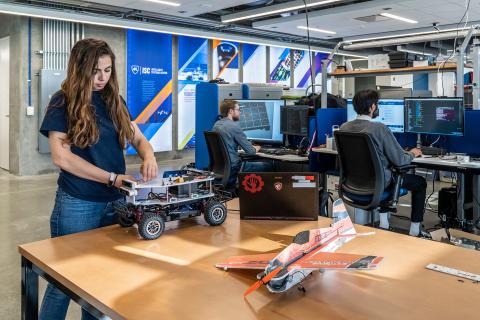
Intelligent Systems Center →The Intelligent Systems Center (ISC) leverages APL’s broad expertise across national security, space exploration, and health to fundamentally advance the employment of intelligent systems for our nation’s critical challenges. The ISC acts as a focal point for research and development in artificial intelligence, robotics, and neuroscience at APL.
Featured Work
At APL, a collaborative community of AI researchers and applied scientists works in domains from beneath the sea to outer space to innovatively incorporate autonomy, computer vision, machine learning, agentic AI, and other techniques across the breadth of our programs and projects. Internally funded AI exploration and research help us take bold steps in this realm to continue advancing AI to ensure our nation’s preeminence in the 21st century and beyond.

GenWar Sim
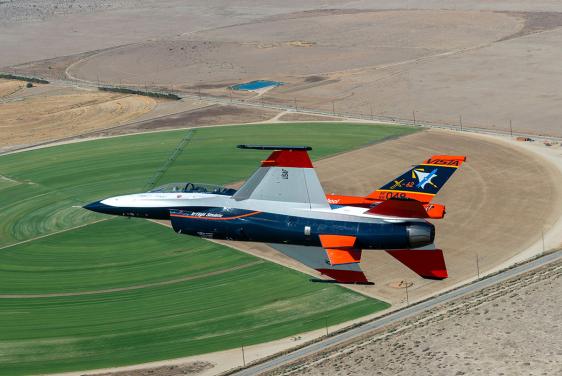
AI-Piloted Aviation
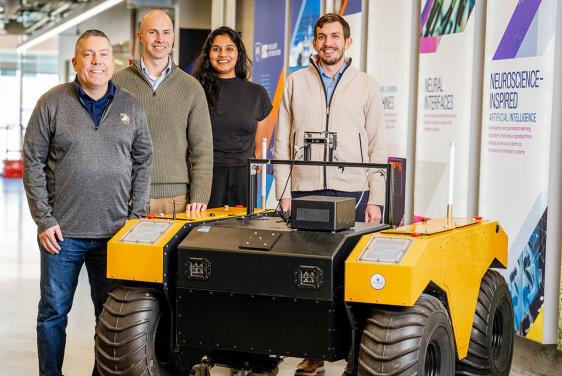
Full Scene Extraction
Defining Innovations
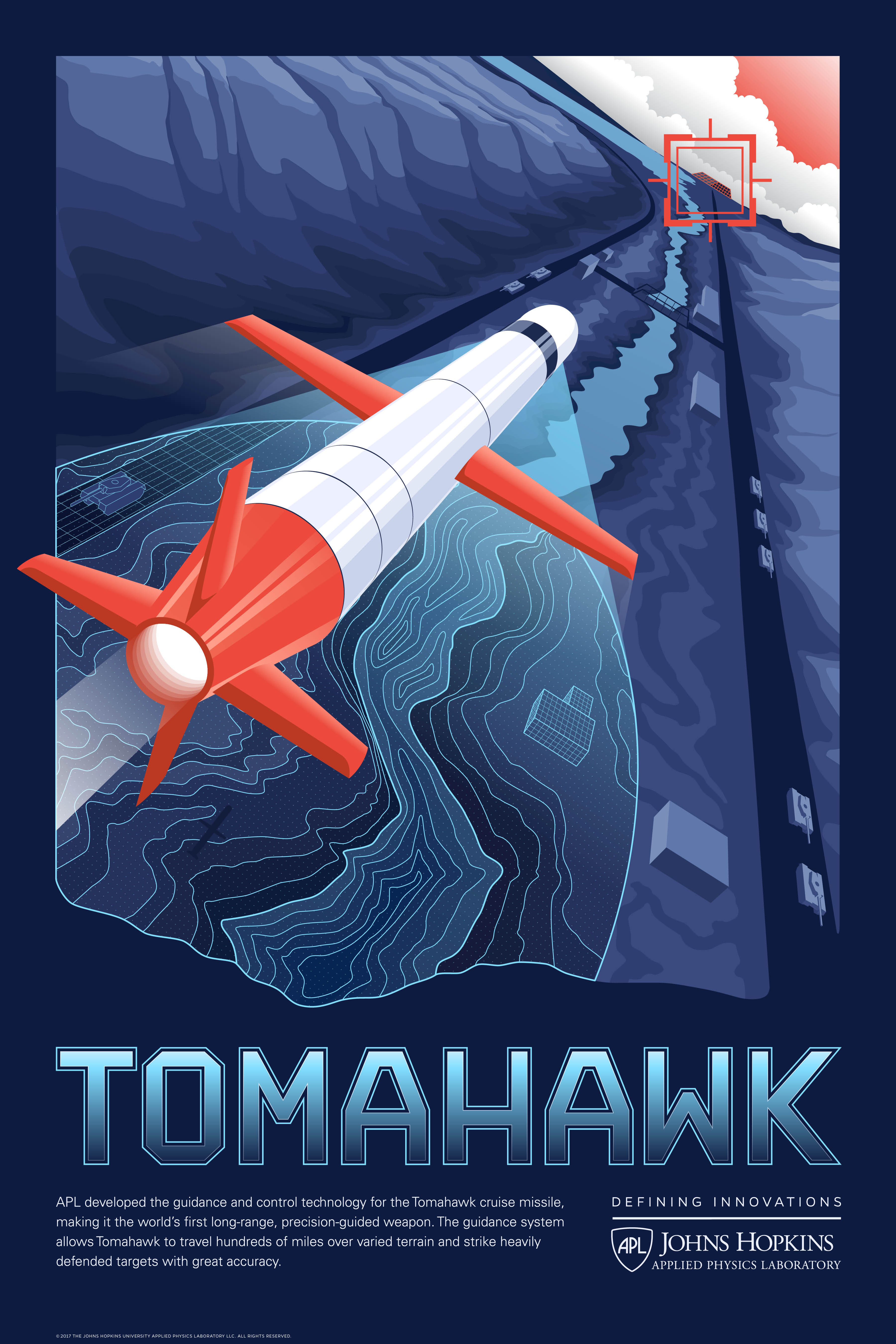
Tomahawk: The World’s First Long-Range, Autonomous, Precision-Guided Weapon
In the early 1970s, the Navy sought APL’s help to field a long-range cruise missile that could navigate heavily defended environments and strike critical targets. Such a weapon required a means to verify and adjust its location en route to a target. To solve this problem, APL engineers applied terrain contour matching (TERCOM) technology, which matches the missile’s onboard altimeter readings to elevation maps stored in its computer. APL developed algorithms to reliably predict what ground areas would provide correct matches. When greater accuracy was needed for conventionally armed Tomahawks, APL developed the performance prediction algorithms needed to apply digital scene matching area correlator (DSMAC) technology, which further increased accuracy by comparing images taken by an onboard camera to scenes stored in the missile computer. The conventional land-attack Tomahawk enabled by TERCOM and DSMAC became the world’s first long-range, autonomous, precision-guided weapon, and it has been a key element of the U.S. arsenal since the early 1990s. TERCOM and DSMAC remain operational on Tomahawk for use when GPS is not available.
Advancing Autonomy in All Domains
APL is advancing autonomous systems across air, land, sea, space, and cyber domains to address critical national security and scientific challenges.

ConceptGraphs

Tactical Behaviors for Autonomous Maneuver
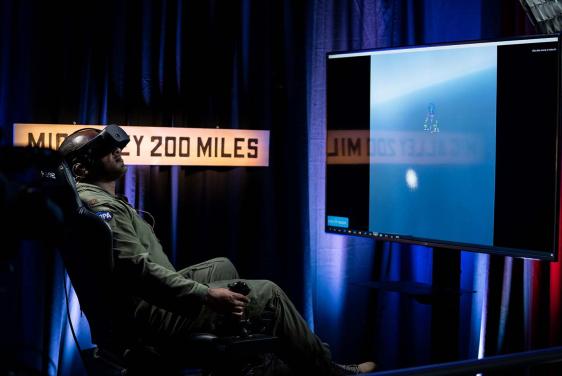
AlphaDogfight Trials

Swarming Uncrewed Surface Vehicles

Uncrewed Surface Vessel Perception

MOSAICS: Cyber Defense for Industrial Control Systems

BAS/CS™: Behavioral Alerting Sets for Control Systems

Integrated Adaptive Cyber Defense (IACD)

National Security Space Missions and Hardware Earth
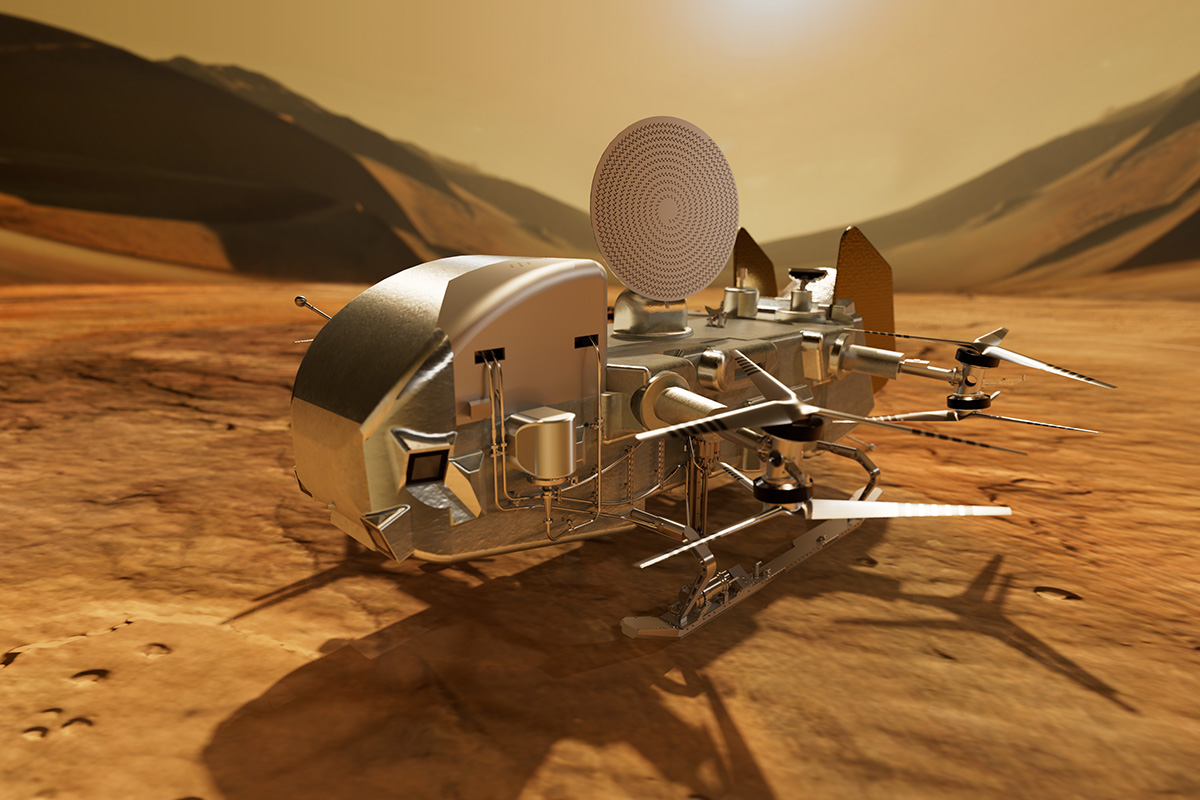
Dragonfly Outer Moons

DART Asteroids

Golden Horde
AI for Discovery and Decision-Making
APL leverages AI across the innovation lifecycle, from agentic systems that accelerate discovery to advanced testing frameworks that validate decision-making algorithms, ensuring technologies are both powerful and trustworthy.
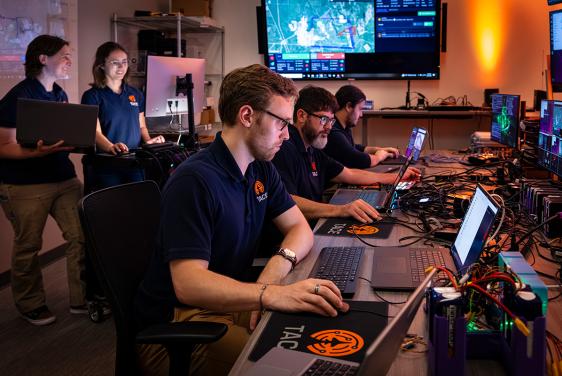
Runtime Safety Assurance for AFWERX Autonomy Prime
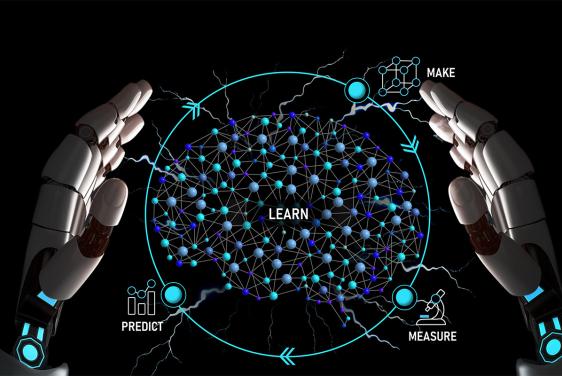
Revolutionizing Materials Discovery for National Security
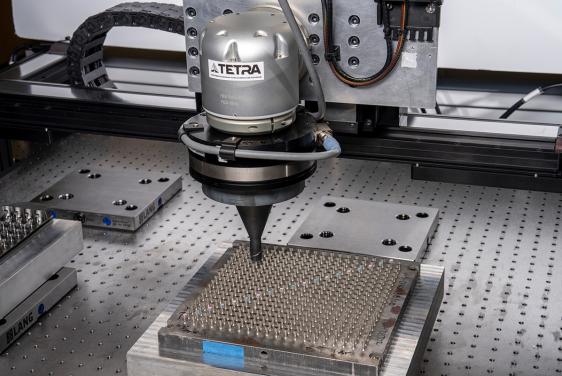
Accelerating Materials Innovation for Defense

AI/AR-Guided Electronic Repair

ACAS X: Airborne Collision Avoidance for the 21st Century
Related News

Oct 1, 2026
Hopkins Collaboration Expands Access to Maritime Testing and Advanced Sensing
Sep 22, 2026
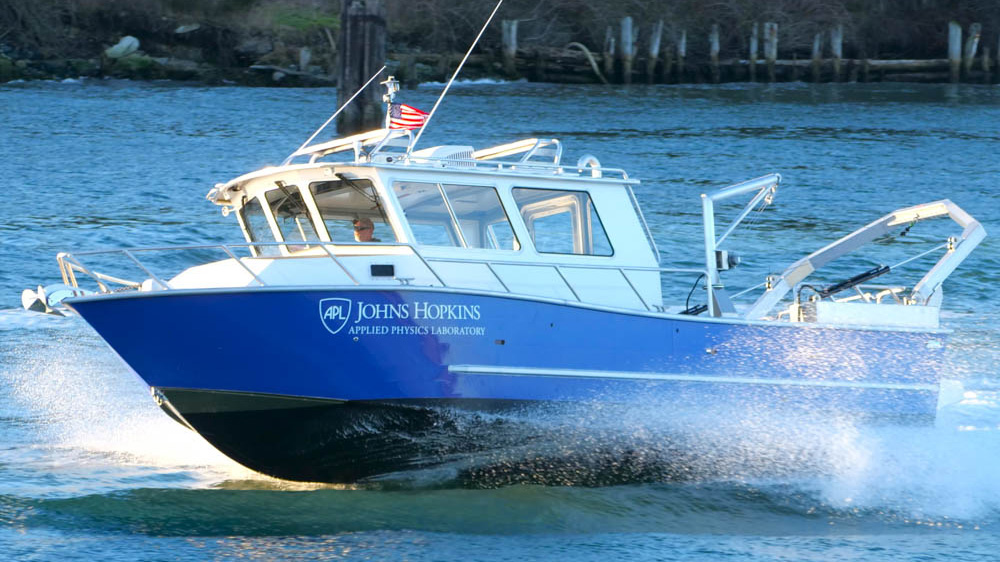
Johns Hopkins APL Expands Maritime Research Capabilities With New Test Vessel
Sep 15, 2026
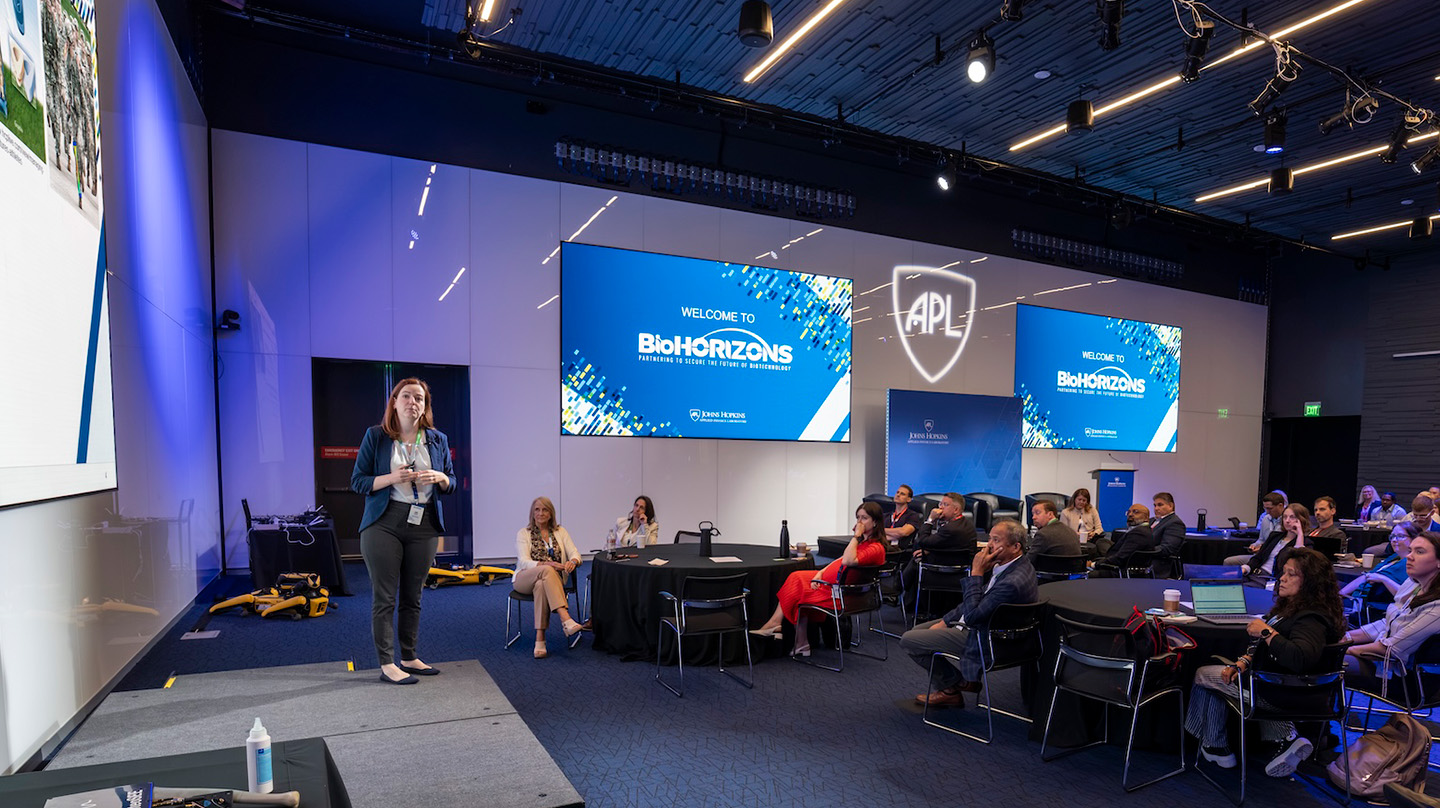
Johns Hopkins APL Hosts Government and Industry Leaders to Discuss Urgent Biodefense Issues

Aug 24, 2026
Johns Hopkins APL-Developed Target-Tracking Tech Drives Critical Defense Systems