
Tracking Methods for Converted Radar Measurements
Target tracking is a critical component in defense and airspace protection. To provide awareness of potential enemy threats through target tracking, dynamic states are repeatedly updated based on observations. Because common dynamic models of moving objects typically use Cartesian coordinates, target tracking systems typically use this coordinate system as well. This presents a statistical challenge, however, when observations are recorded with different coordinate systems. This is the case with radar measurements, which use spherical coordinates (range, bearing, and elevation) instead of Cartesian coordinates (x, y, z). The main problem is integrating the statistics of new measurements with a priori state estimates to provide an updated a posteriori estimate. This article focuses on a converted-measurement approach to compute descriptive Cartesian statistics from spherical measurements for updates in a linear tracking system. Converted-measurement tracking, compared with mixed-coordinate tracking, can facilitate multisensor fusion in complex sensor networks. Various converted-measurement methods were evaluated, including Taylor approximations, unscented transforms, and debiased statistical methods, in a simple tracking scenario. Tracking performance varied across these three methods depending on the geometry of the scenario, so users of converted-measurement methods should evaluate the performance of each method for their given domain and application.

In Memoriam: Harry K. Charles Jr. (1944–2025)
Dr. Harry K. Charles Jr., an APL Master Inventor, former department head, and deeply respected expert in electrical engineering and microelectronics, died on May 8, 2025, at the age of 80.

APL Achievement Awards and Prizes: The Lab’s Top Inventions, Technical Breakthroughs, and Staff Achievements for 2023 and 2024
The Johns Hopkins University Applied Physics Laboratory (APL) is dedicated to delivering game-changing technical solutions to our nation’s most critical challenges. In addition to making technical contributions, APL staff members advance enterprise services, participate in and expand a robust innovation ecosystem, and embody the organization’s core values in their work. Every year the Laboratory honors staff members’ accomplishments with an awards program. This article details the awards presented for achievements in 2023 and 2024.

Wearables-Based Disease Surveillance: SIGMA+ Human Sentinel Networks Concept of Operations
The Defense Advanced Research Projects Agency SIGMA+ program developed a persistent, real-time, early warning and detection system for the full spectrum of chemical, biological, radiological, nuclear, and explosive weapon of mass destruction threats at the city to region scale. In support of this program, and leveraging technical expertise in modeling and simulation, applied mathematics, and epidemiology, the Johns Hopkins University Applied Physics Laboratory (APL) characterized and quantified the impact a wearables-based human sentinel network would have on the ability to provide advanced detection of a naturally occurring or intentional biothreat event. Modeling results demonstrate that instrumenting as few as 5% of the population could advance detection of seasonal influenza by 5–14 days and an anthrax attack by ~1 day as compared with traditional public health surveillance. Early detection and geolocation of individuals exposed to biological threats enables timelier and more effective biothreat countermeasures and mitigation strategies.
Assessment of Sequencing for Pathogen-Agnostic Biothreat Diagnostics, Detection, and Actionability for Military Applications
Biothreat detection strategies have historically focused on cheap, specific, and deployable assays that detect a small but specific nucleic acid or protein component of a threat organism. Genomic sequencing technologies that have emerged over the past 15 years are poised to find their place in the biothreat detection tool kit for military and civilian use. Here we describe efforts to compare and contrast sequencing to traditional polymerase chain reaction (PCR) assays for diagnostics and detection of biothreat agents of concern in military applications. We show that after direct spiking of human blood and serum with biothreat simulants, agnostic sequencing can achieve detection. However, for known agents, PCR is still superior in terms of speed, cost, scale, and reliability for military applications. Although PCR should still be the first choice for diagnostics and detection when an agent is known or suspected, for unknown agents, agnostic sequencing can be a powerful addition to identify causative agents in soils, aerosols, and biothreats in patient samples. APL developed and conducted this work for the Department of Defense to address the basic question of when to use PCR versus when to use sequencing for field-forward infectious disease diagnostics and environmental detection.

MLM: Machine Learning for Threat Characterization of Unidentified Metagenomic Reads
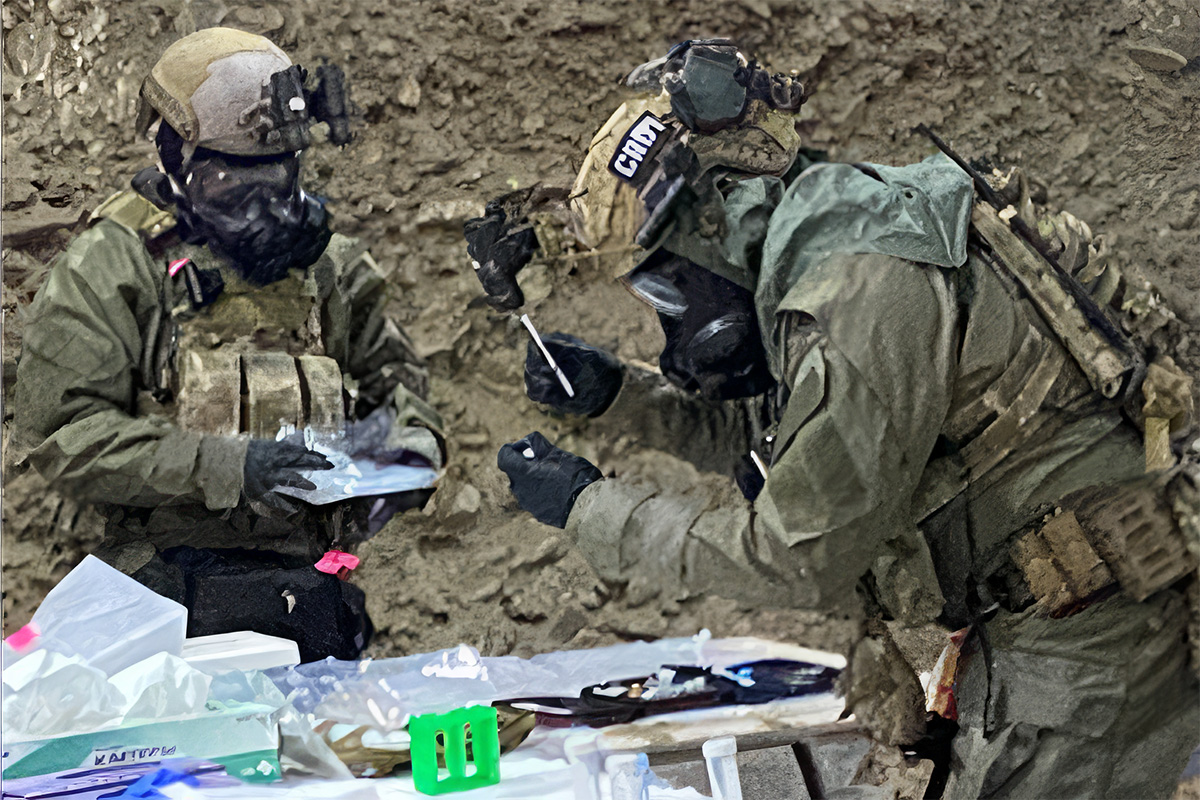
Forensics and military investigators often assess sites of interest, searching for evidence of biological hazards. The application of metagenomics provides genomic data for all microorganisms present in a sample, enabling advanced analysis for detection of biological signatures and threat detection from such sites. DNA sequence segments (digitally represented as “reads”) from metagenomics samples are commonly compared with reference libraries in order to identify microorganisms present in the sample. However, this approach does not capture the complete biological signature, as there always remains a subset of reads that are unable to be successfully mapped to a known organism. The Johns Hopkins University Applied Physics Laboratory (APL) Machine Learning for Metagenomics (MLM) pipeline characterizes these unidentified reads in terms of composition and alignment with sequences of known organisms. Since these reads are unable to be mapped directly to a known organism, our models classify each read according to one of five threat levels, ranging from 0 to 4 (with threat level 4 the most severe). Our pipeline consists of random forest, Bayesian network, and clustering models. When testing this pipeline against simulated and real sequencing data, we achieved high threat level classification accuracy: 95% for clusters of related reads. Based on these results, we are preparing for deployment of our pipeline on far-forward devices, providing investigators with real-time threat assessment of biological materials to inform an appropriate rapid response.

Using Knowledge Graphs to Counter Weapons of Mass Destruction
This article describes the development of a data-driven approach to map adversarial activity into machine-readable models. Specifically, this approach is grounded in well-structured knowledge graphs and uses a semantic representation of domain-specific pathways implementing formal ontology and Resource Description Framework (RDF) and Web Ontology Language (OWL). In addition, the article describes a web-based application through which a user can interact with the underlying knowledge graph. The application also allows for development of analytics that use these data to answer questions about adversarial activity.
APL’s Contributions to the Odor Detection Canine Community
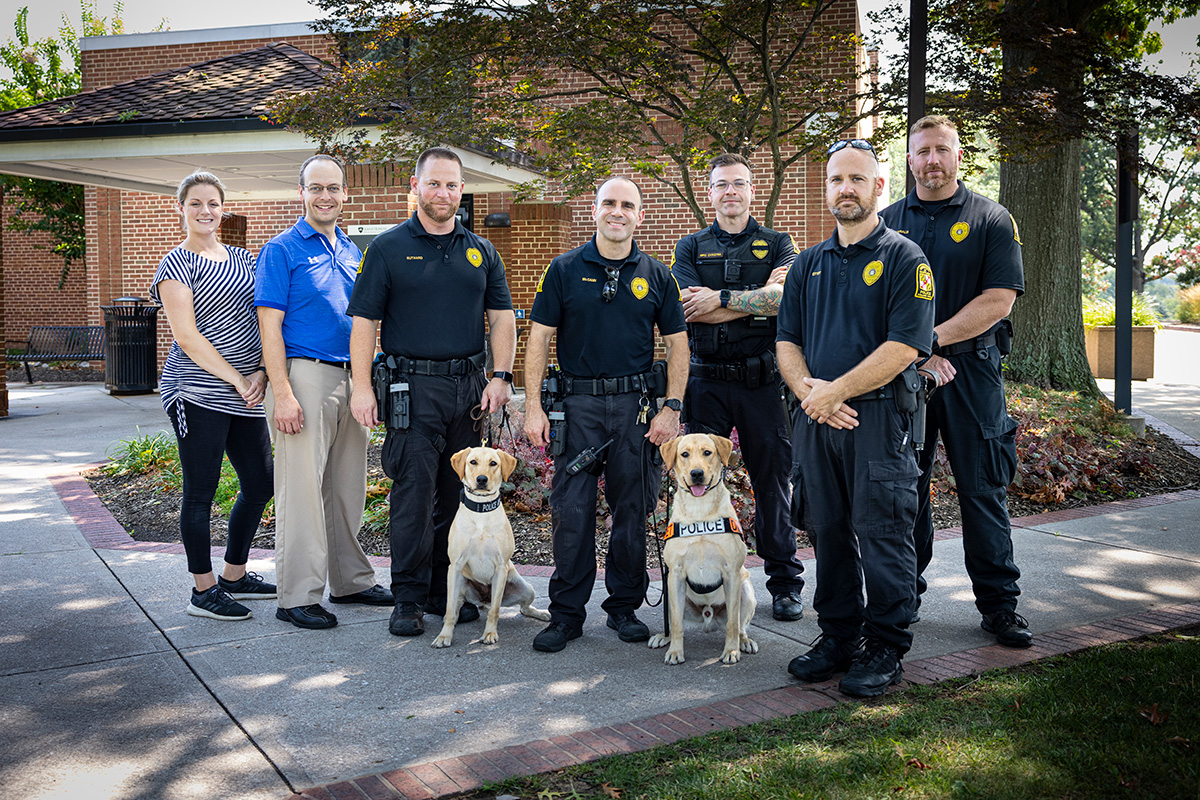
Odor detection canines play a key role in ensuring our nation’s security. For more than 15 years, the Johns Hopkins University Applied Physics Laboratory (APL) has supported research on and advancement of the community’s efficacy and capabilities through the application of interdisciplinary solutions spanning chemistry, biology, data analytics, and engineering. Not only have APL’s contributions resulted in strong collaborations across the research space, but they have also directly informed and impacted strategies and capabilities for operational deployments of odor detection canines.
Large-Scale Production of Radiopure 135Xe from Bremsstrahlung γ-Irradiation of Solid Xenon Difluoride
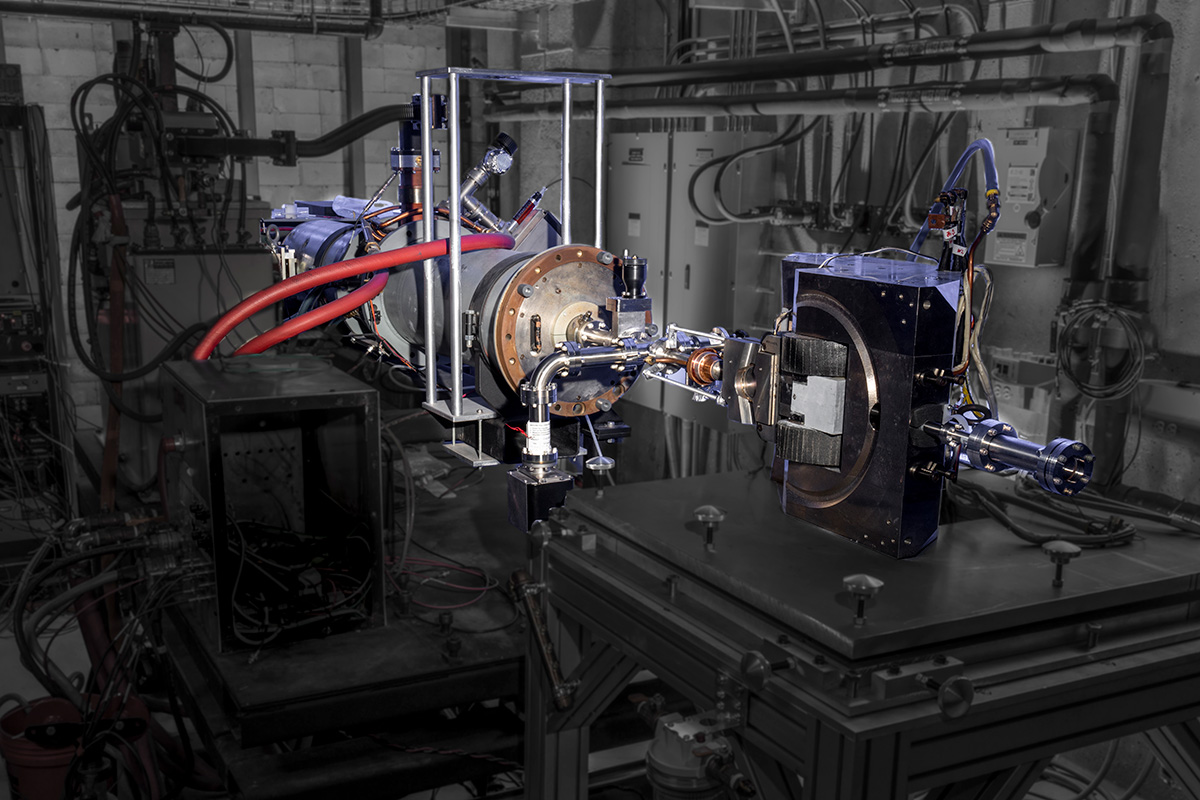
The United States, together with the United Kingdom, signed the Limited Nuclear Test Ban Treaty in 1963. The Comprehensive Nuclear-Test-Ban Treaty was partially ratified by the United Nations General Assembly in 1996. A multifaceted worldwide monitoring network, in which the United States actively participates, continuously monitors treaty compliance. One of the tools this worldwide network uses is atmospheric sampling of radioxenon. During an underground detonation, noble gases, such as xenon, do not react with soil and can escape into the atmosphere. The detection of radioactive xenon in 2006 provided reliable proof of North Korea’s underground testing. Because radioactive xenon is required for calibrating the detectors, the synthesis of high-purity radioxenon is of interest. In light of this interest, a team at the Johns Hopkins University Applied Physics Laboratory (APL) developed a novel production pathway for the 135Xe isotope using APL’s new linear accelerator facility.
Simulants for Chemical and Explosive Threats
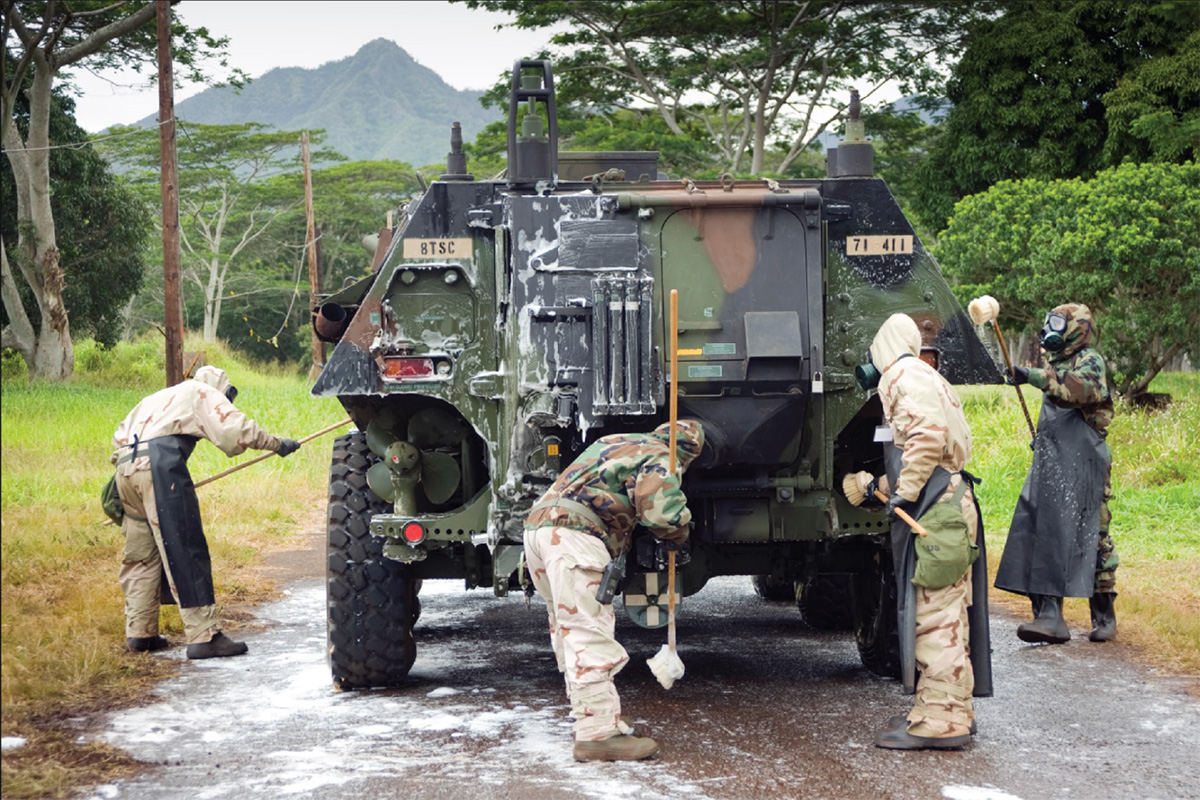
Studies using chemical warfare agents (CWAs) and explosives are dangerous and are therefore conducted only in specialized laboratories with highly controlled conditions and limited accessibility. Obtaining these materials for study is another challenge, as they are tightly regulated. Because of these challenges, simulants—molecules that mimic key characteristics of a specified CWA or explosive but lack toxicity—are often used in testing, sensor development, and decontamination studies. In the past, simulants have generally been selected on the basis of their historical use (with researchers sometimes simply choosing “convenient” materials that happen to provide a detector alarm, for example) rather than rational design. The Johns Hopkins University Applied Physics Laboratory (APL) created a simulant development approach, based on systems engineering concepts, that takes input from relevant parties and is scoped specifically for a project objective. This methodology can be universally applied to any type of simulant and includes down-selection criteria to identify specific simulant candidates that can be verified and validated according to the project’s required fidelity. This article describes the development approach, selection process, and demonstrated use cases for both CWAs and energetic materials.