Recent News and Press Releases

News
Oct 1, 2026
Hopkins Collaboration Expands Access to Maritime Testing and Advanced Sensing
Students from the Johns Hopkins Whiting School of Engineering (WSE) collaborated with researchers at Johns Hopkins APL to make maritime testing and optical sensing more accessible and cost-effective. Their work, part of WSE’s senior design mechanical engineering capstone, has various national security applications.

Press Release
Sep 23, 2026
Paxton Elected Fellow of the American Geophysical Union
Johns Hopkins APL’s Larry Paxton has been elected a fellow of the American Geophysical Union. Throughout his career, Paxton has helped deepen scientists’ understanding of Earth’s upper atmosphere through pioneering space-based instruments and decades of research.
News
Sep 22, 2026
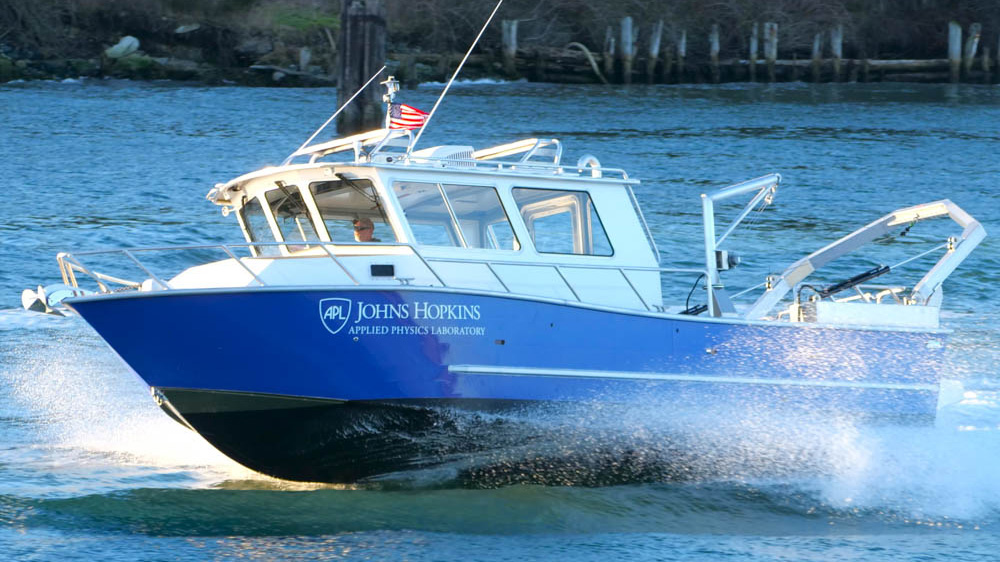
Johns Hopkins APL Expands Maritime Research Capabilities With New Test Vessel
APL’s new Sea++ test vessel gives researchers and government sponsors a dedicated platform to rapidly test, evaluate, and demonstrate emerging maritime technologies in realistic operational environments. By enabling faster experimentation and more flexible on-water testing, Sea++ helps accelerate the development and transition of innovative capabilities for national security.

News
Sep 16, 2026
Fieldable Quantum Sensors Could Revolutionize Warfighter Safety
Johns Hopkins APL scientists are developing a portable quantum sensing platform using nuclear magnetic resonance spectroscopy that has potential to enable warfighters and others working in contested environments to identify chemical and biological threats before they inflict damage.
Press Release
Sep 15, 2026
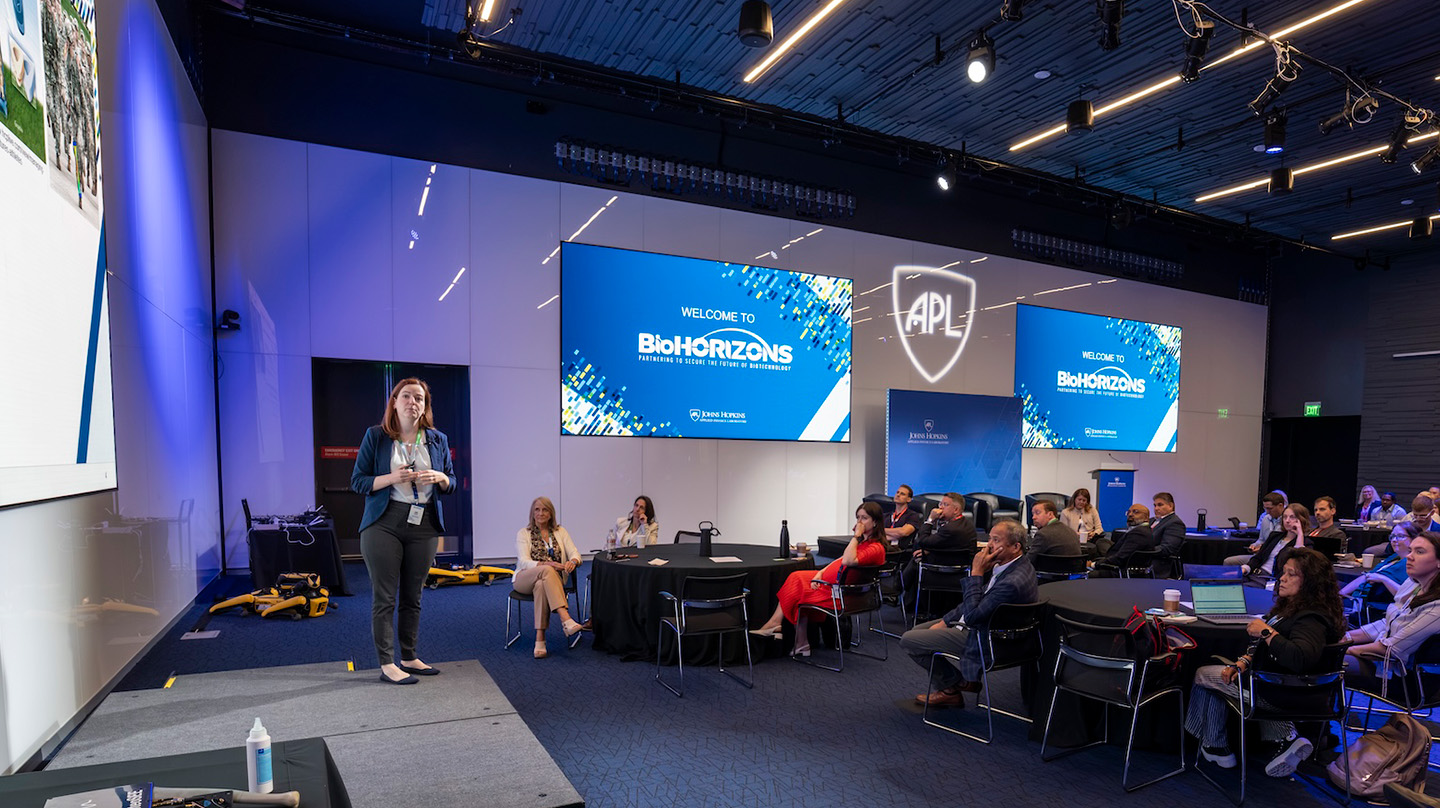
Johns Hopkins APL Hosts Government and Industry Leaders to Discuss Urgent Biodefense Issues
The BioHorizons conference convened experts from across the biotechnology industry to explore how to keep the U.S. at the forefront of biotechnology research and development and how to best transition critical capabilities from the lab to the field.