News
Novel Coating Technology Withstands Extreme Combustion Environments
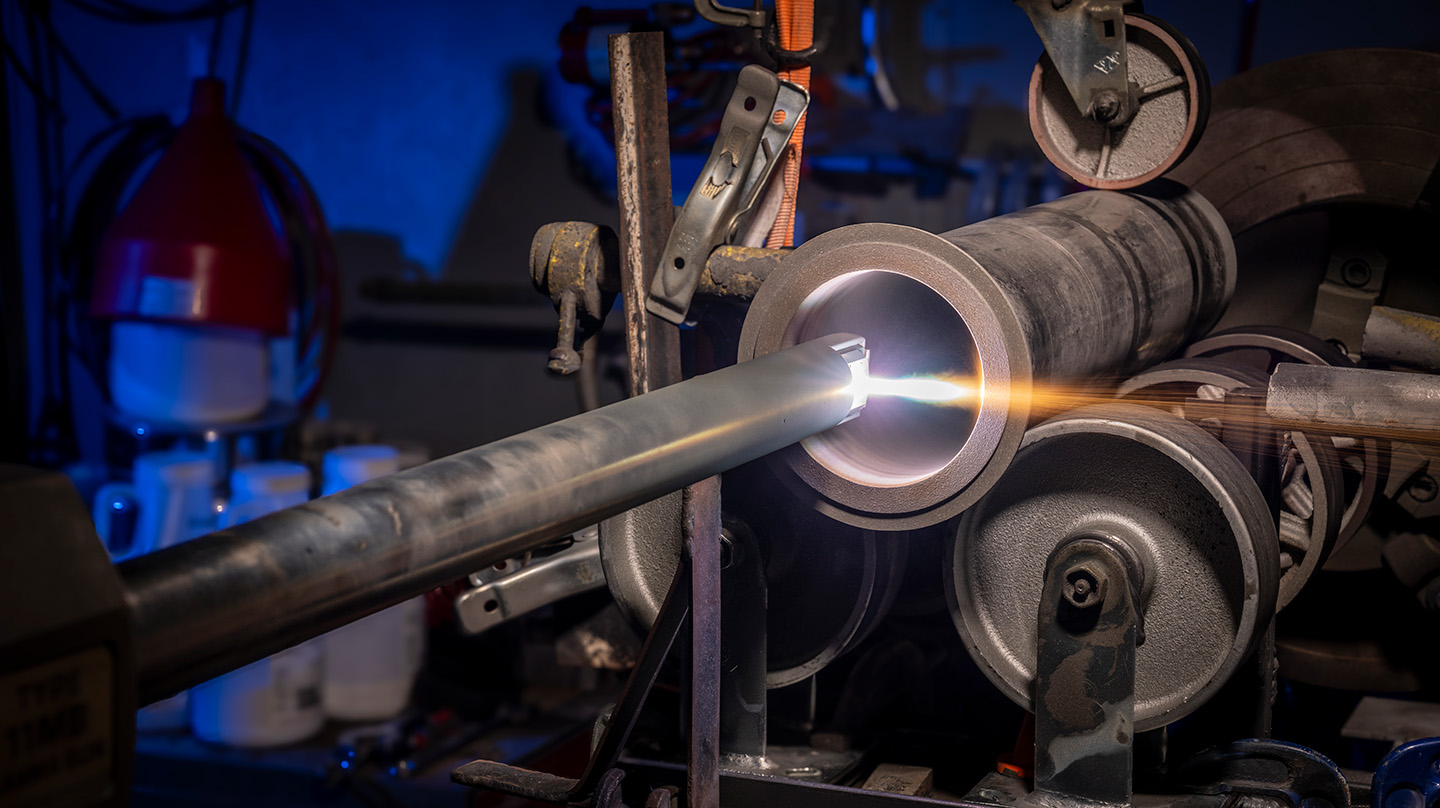
A cross-disciplinary team developed a novel coating and deposition system using a plasma torch, as seen above. The coating is designed to protect critical components of a chemical neutralization device.
Credit: Johns Hopkins APL/Craig Weiman
Audio generated using AI voice technology.
A cross-disciplinary team at the Johns Hopkins Applied Physics Laboratory (APL) in Laurel, Maryland, has developed and applied a novel high-performance coating system engineered to endure extreme thermal and chemical stress. Designed for precision application on complex internal geometries, the coating demonstrated exceptional durability in recent high-temperature testing, highlighting its potential to significantly extend the operational life of components routinely exposed to intense combustion and acidic environments.
The Laboratory has been adapting and testing a specialized thermal processing system, known as the Pulse Combustion Engine, for several years. The Pulse Combustion Engine relies on technology developed by ThermoChem Recovery International (TRI) that was originally designed to convert waste into clean synthesis gas, a mixture of gases used to produce energy or fuel. APL researchers collaborated with TRI engineers to modify the system for use in harsh combustion environments that require enhanced protection for the engine’s internal components.
After extensive APL-led materials studies, the Pulse Combustion Engine underwent rigorous survivability testing and demonstrated exceptional resilience for 13 hours under extreme conditions. Central to the test’s success was a specially formulated nickel-chromium-aluminum-yttrium (NiCrAlY) coating, applied using a compact internal diameter plasma spray torch, to protect the system’s intricate interior surfaces.
“This project exemplifies how APL’s unique breadth of expertise drives successful innovation,” said Leslie Hamilton, program manager for Science of Extreme and Multifunctional Materials. “The coating withstood conditions harsher than the inside of a volcano — sustaining 1,150°C and exposure to highly acidic gas at concentrations 600 times above what’s considered immediately dangerous to life and health. Achieving that kind of resilience required a creative approach rooted in our extensive experience of working with materials for extreme environments.”
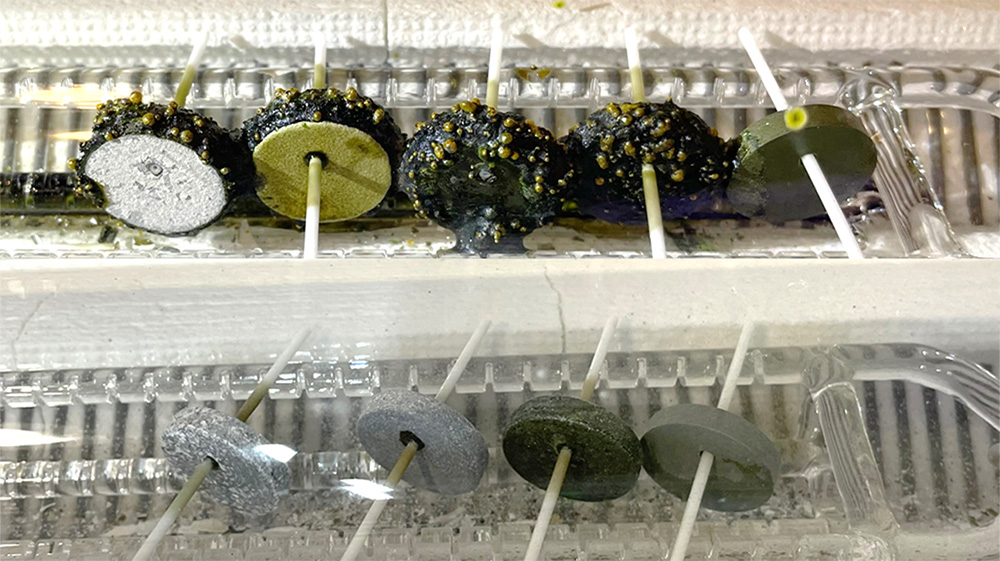
A side-by-side comparison of metal coupons after exposure to a corrosive chemical environment: Uncoated samples (top) show significant degradation, while those treated with a plasma-sprayed NiCrAlY alloy coating (bottom) exhibit enhanced resistance and surface integrity.
Credit: Johns Hopkins APL
Related Work