Our Contribution
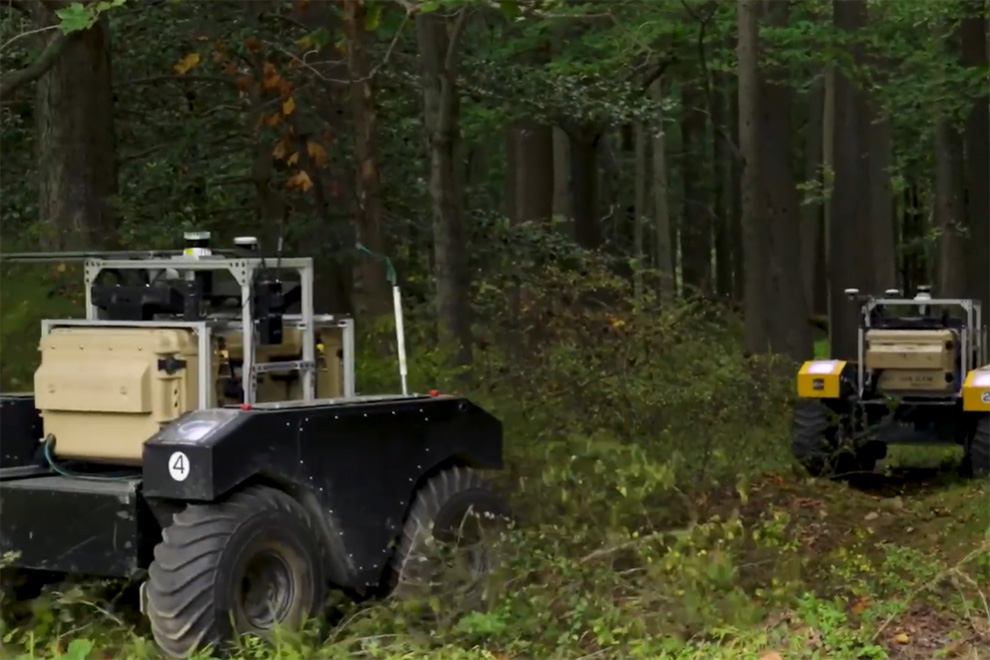
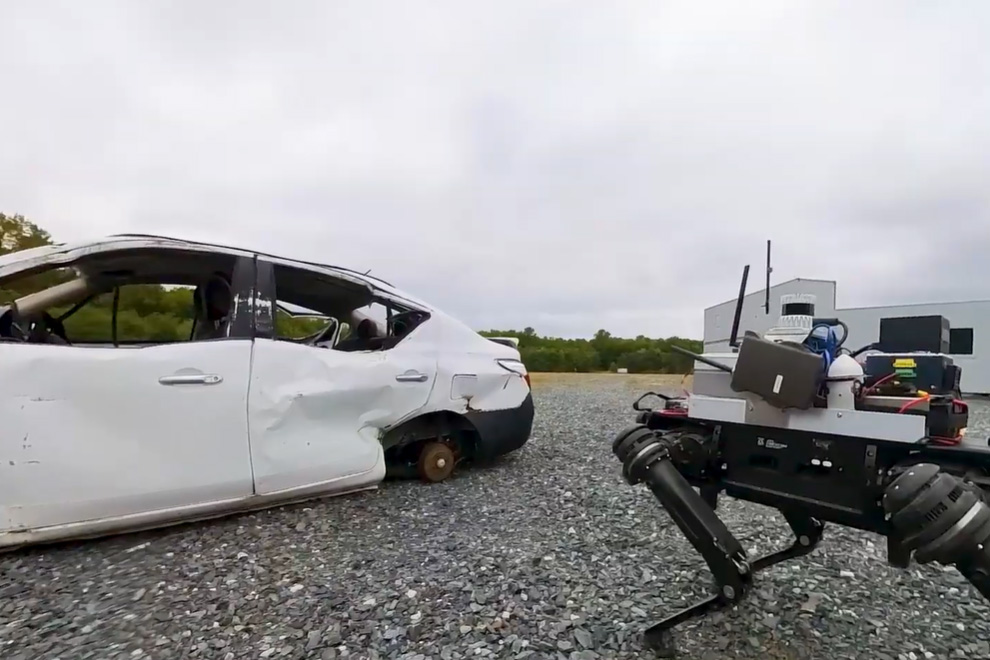
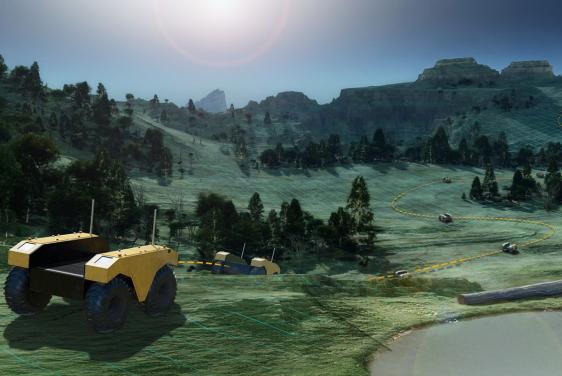
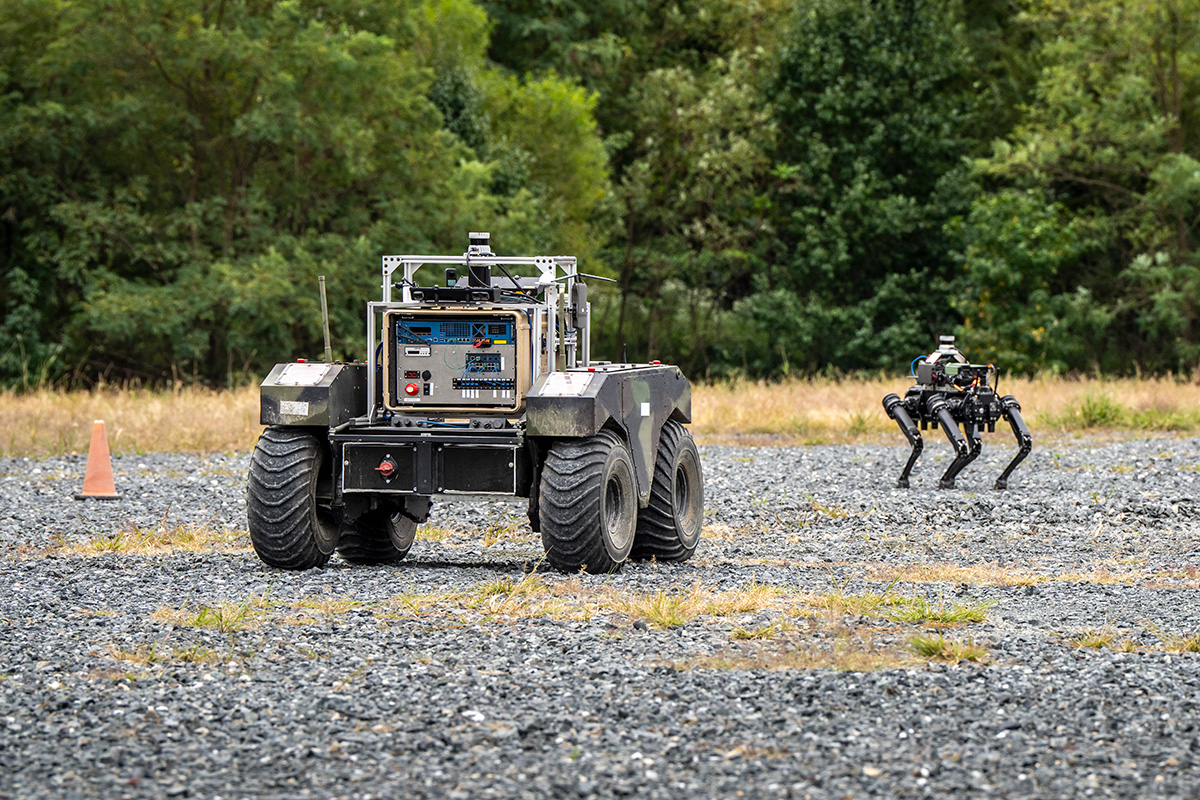
Persistent exploration in graph theory, agentic artificial intelligence (AI), tactical behaviors, and multi-agent autonomy culminated in a breakthrough demonstration translating foundational advances into operational impact. Two core developments were rapidly adapted for a real-world scenario: Stratified Topological Autonomy for Long-Range Coordination (STALC) and agentic AI for Battle Damage Assessment (BDA). In the first phase of the demonstration, a team of autonomous robots was tasked with reaching a designated target location without being detected by opposing forces. The robots began with only limited information about the environment and the locations of potential threats, requiring them to continuously update their plans as new information became available while minimizing their exposure to observation and other risks. To address this challenge, APL researchers worked alongside DEVCOM Army Research Laboratory (ARL) researchers to integrate visibility-aware terrain modeling, tactical topological graph construction, and mixed-integer optimization into STALC. STALC represents the environment as a topological graph that captures key terrain features, routes, and mission constraints, enabling autonomous teams to efficiently plan and coordinate their movements in complex, changing environments. By incorporating visibility and traversal risk into the graph structure and edge costs, the planner can rapidly generate coordinated routes for multiple robots while adapting to evolving conditions. These algorithmic developments enabled the robot team to successfully reach its objective while remaining undetected. In the second phase, researchers demonstrated autonomous BDA and area patrol capabilities using robotic platforms enabled with an agentic AI framework. The system combined full-scene extraction, task-driven perception, and adaptive reasoning to identify relevant information, focus on mission priorities, and generate timely, actionable assessments with minimal human intervention. Across both phases, APL researchers worked closely with ARL, rapidly adapting to in-field challenges through continuous testing and integration. This effort culminated in a high-stakes live demonstration that validated the robustness and operational relevance of the technologies and demonstrated how sustained fundamental research can bridge theory and practice to enable autonomous robotic teams to carry out demanding and potentially dangerous tasks, reducing risk to human operators while extending mission capabilities.