Press Release
Johns Hopkins APL’s Stadter Named Vice Chair of Air Force Scientific Advisory Board
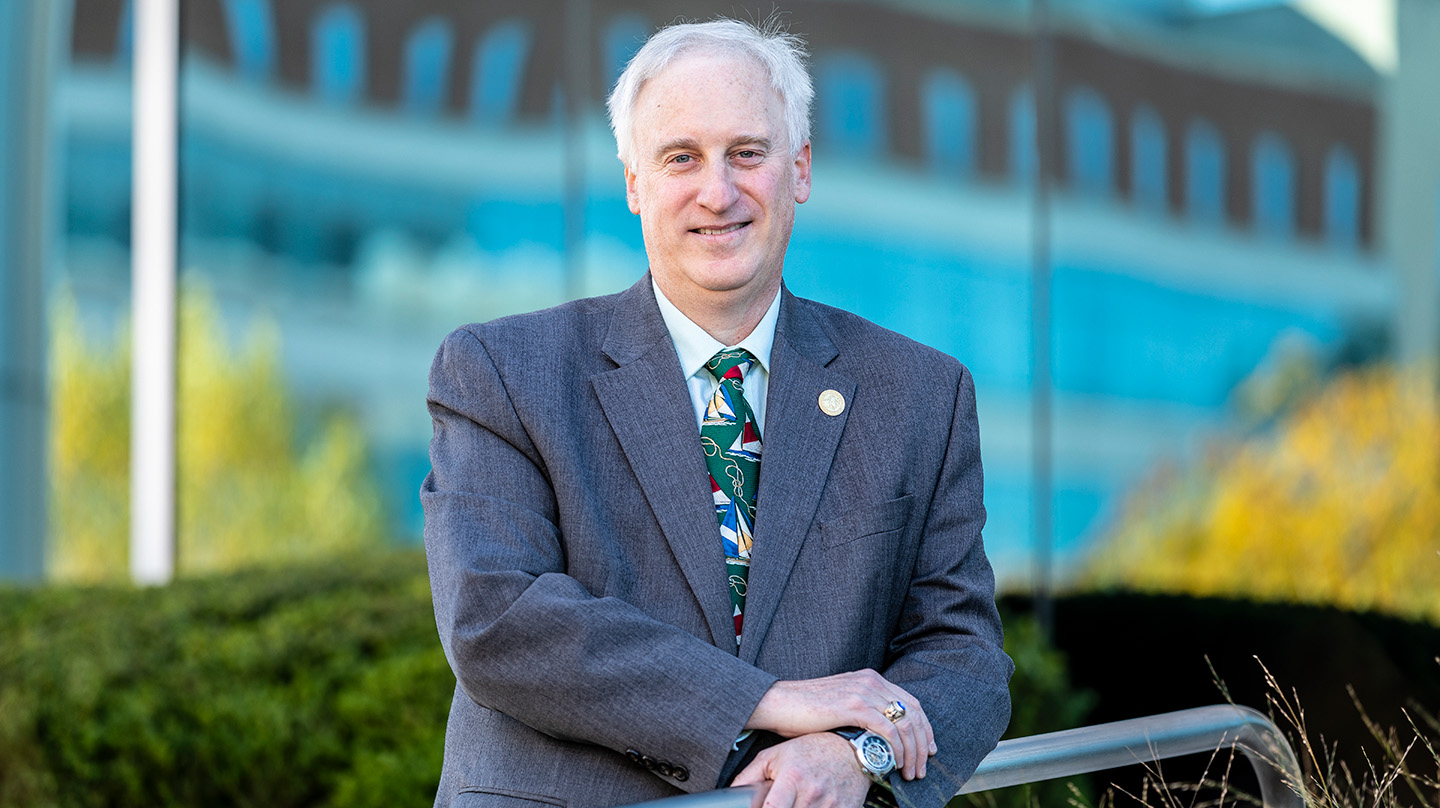
Patrick Stadter, mission area executive for Theater Defense, has been named vice chair of the Air Force Scientific Advisory Board.
Credit: Johns Hopkins APL
Audio generated using AI voice technology.
Patrick Stadter, mission area executive for Theater Defense at the Johns Hopkins Applied Physics Laboratory (APL) in Laurel, Maryland, has been appointed vice chair of the Department of the Air Force Scientific Advisory Board, returning to a panel where his earlier work helped inform investments in contested operations, data fusion, and national security space.
Stadter is among 14 board appointees announced by the Air Force on July 20. The board provides independent scientific and technical advice to senior Air Force and Space Force leaders, including the secretary of the Air Force, the Air Force chief of staff, and the chief of space operations. Its studies address complex technological questions with implications for force readiness, future capabilities, and research and development priorities.
“Patrick’s appointment as vice chair reflects the technical depth, strategic judgment, and record of leadership he has brought to some of the nation’s most demanding defense challenges,” said Dave Van Wie, director of APL. “He has spent his career translating rigorous analysis and advanced technology into operational capabilities, and providing trusted technical direction in domains ranging from missile defense to rapid acquisition.”
The appointment marks Stadter’s return to the Scientific Advisory Board (SAB), where he served from 2015 to 2022 as studies chair, vice chair, and panel member. During his prior SAB service, he led studies addressing Air Force operations in highly contested environments, data fusion architectures for locating and identifying targets, and critical space warfighting capabilities.
That work earned him the Air Force Chief of Staff Award for Exceptional Public Service in 2019, the Air Force’s highest public-service honor for a civilian. It also shaped his view of the board’s responsibility as an independent source of technical judgment for senior Air Force and Space Force leaders.
“America’s airmen and Guardians face an increasingly complex and contested security environment where technological superiority, resilient integration across the Joint Force, and the ability to make decisions faster than our adversaries will be decisive.” Stadter said. “I am honored to serve on the Air Force Scientific Advisory Board and contribute independent technical advice that helps the Air Force deliver innovative capabilities that strengthen deterrence and ensure our warfighters remain ready for the challenges ahead.”
As mission area executive for Theater Defense at APL, Stadter sets the direction for a broad portfolio of programs focused on defending U.S. forces, allies, and partners from advanced aircraft and cruise, ballistic, and hypersonic missiles. His responsibilities include overseeing programs involving Aegis, Standard Missile, Air and Missile Defense Radar, Cooperative Engagement Capability, Aegis Ballistic Missile Defense, Hypersonic Glide Phase Intercept, and other advanced development programs.
Stadter’s career spans missile defense, national security space, autonomous systems, and defense acquisition. During more than three decades at APL, he has provided technical leadership for programs including Aegis Ballistic Missile Defense and Standard Missile 3 Block IIA testing, conducted NASA-funded research on spacecraft navigation and communications, and led a space security and defense portfolio. He has also led rapid-acquisition initiatives at the Aerospace Corporation, supporting the Space and Air Force rapid capabilities offices, Space Development Agency, and Strategic Capabilities Office.