Warfighting Analysis
From its founding in 1942, Johns Hopkins APL has made analyzing warfighter performance in realistic operational contexts an integral part of our work in testing and evaluation. APL examines how physical, operational, cognitive, and behavioral factors can affect mission outcomes.
Drawing on multidisciplinary expertise in operational test and evaluation, data science, human factors, and mission engineering, APL develops and evaluates tools, models, and methods to monitor and predict performance. This includes designing controlled experiments and field studies, integrating physiological, behavioral, environmental, and mission data, and applying advanced analytics to study and deliver data-driven analyses that inform doctrine, policy, training, staffing, system design, and acquisition.
Featured Work
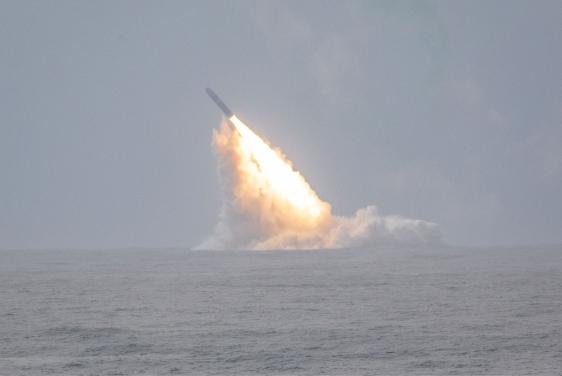
Demonstration and Shakedown Operation

Shaping the Joint Future Operating Environment
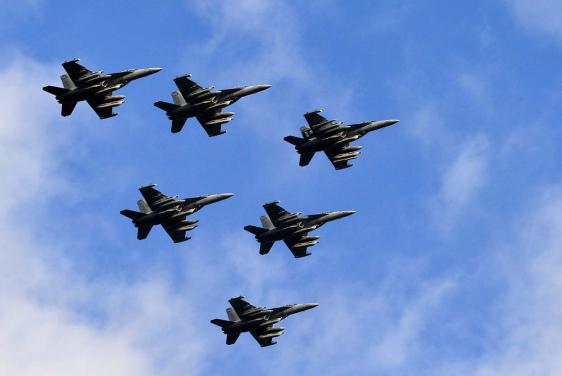
Modeling Warfighter Decision-Making

Deployed with the Fleet
Featured Tech Digest Issues

Biomedicine at APL Vol. 31, No. 4 (2013)
This issue of the Johns Hopkins APL Technical Digest is the second of two issues devoted to biomedical science and technologies being pursued by APL’s Research and Exploratory Development Business Area. The Revolutionizing Prosthetics program has been a model for integrating scientific research and advanced development across an expansive multidisciplinary and multiorganizational team. This proven capability has led to significant advances in many areas, including applied neuroscience, dexterous robotics, injury mitigation systems, patient-centered care, explosive ordnance disposal robotics, and systems engineering for improved patient safety. With extraordinary advances in genetics, molecular biology, cognitive science, bioinformatics, and biomaterials, the Laboratory will continue to address emerging challenges of national and global significance that will likely be the subject of future issues.

Human Dynamics Vol. 30, No. 1 (2011)
Human Dynamics: Threats to our national security embodied in terrorism, insurgency, and asymmetric warfare cannot be addressed only by physical means in the natural environment. They emerge from and act through the social and cultural environments in which people interact with each other, with groups, and with broad movements. Human dynamics, the realm of study and operations in those environments, is recognized as crucial to dealing with these threats. This issue of the Johns Hopkins APL Technical Digest presents several APL efforts aimed at increasing our understanding of and ability to operate in these social, cultural, and behavioral domains. Outer Planetary Exploration: One of the scientific goals of a mission to Jupiter is to investigate the potential habitability of Jupiter’s ocean-bearing moon Europa, as described in the last article of this issue.

Johns Hopkins APL Tackles Military Sleep Deprivation With Innovative Smart Tool Feb 14, 2024