News
Undersea Leaders Exchange Bold Ideas at 38th Submarine Technology Symposium
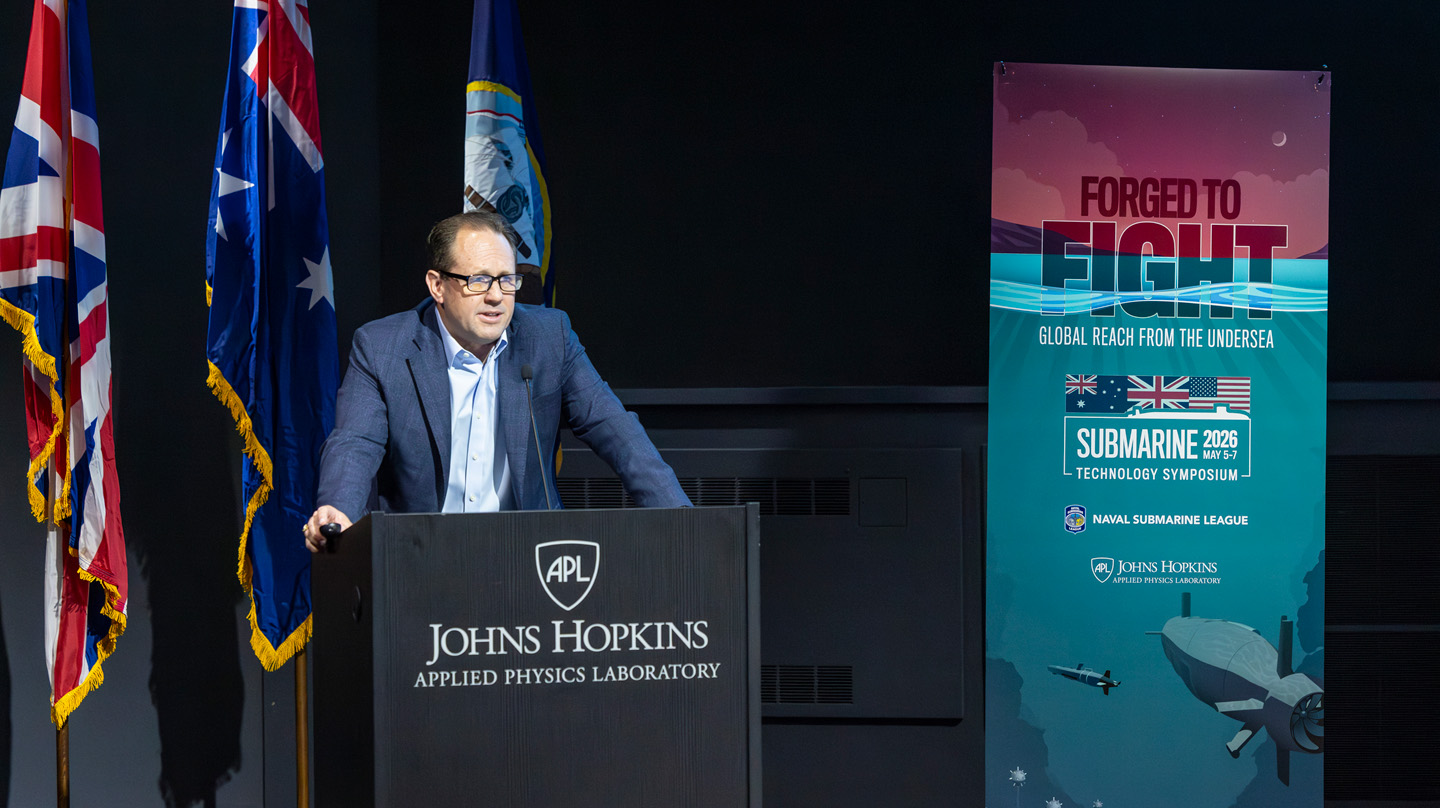
Christopher Watkins, Submarine Technology Symposium co-chair, welcomes attendees to the annual conference.
Credit: Johns Hopkins APL/Ed Whitman
Audio generated using AI voice technology.
As undersea warfare enters a more contested and fast-moving era, leaders across the U.S. Navy, allied nations, industry, and academia are racing to rethink how submarines fight, adapt, and survive. That urgency drove discussions at the 38th annual Submarine Technology Symposium (STS), held May 5-7 at the Johns Hopkins Applied Physics Laboratory (APL) in Laurel, Maryland, where more than 600 participants gathered to examine the future of undersea advantage.
Hosted by Commander, Submarine Forces, and co-sponsored by the Naval Submarine League and APL, the symposium centered on the theme “Forged to Fight – Global Reach from the Undersea.” Discussions focused on how undersea forces can maintain their advantage amid rapid technological change and increasingly contested maritime domains.
Vice Adm. Richard Seif, commander, Submarine Forces, outlined the challenges facing warfighters in undersea environments and emphasized the need for advanced awareness capabilities worldwide.
“STS is a great forum for sharing new ideas and technologies that support mission-critical operations,” said Seif, this year’s keynote speaker, about the symposium. “We need advanced awareness capabilities worldwide to support the challenges facing our warfighters in undersea environments.”
Christopher Watkins, STS co-chair and APL’s chief mission engineering and integration officer, highlighted the operational and technological pressures shaping today’s undersea forces. He pointed to recent conflicts in the Middle East and Ukraine as evidence of how low-cost systems, rapid adaptation, and compressed development timelines are reshaping warfare — trends likely to influence the undersea domain.
“For our community, the task is clear: maintain undersea advantage, adapt to a more contested battlespace, and ensure the force is ready for what comes next,” Watkins said.
For the second consecutive year, participants from AUKUS — the security partnership among Australia, the United Kingdom, and the United States — attended the full symposium, underscoring the importance of allied collaboration in strengthening undersea advantage.
Retired Rear Adm. Lorin Selby, STS general chair, emphasized the symposium’s role as a forum where strategic vision and technical innovation converge.
“This gathering of operators in the fleet, AUKUS partners, scientists, and industry professionals fosters the interchange of ideas and conflict‑solving through a broad, diverse team,” Selby said. “Over the next three days, we will focus on what matters most: ensuring our submariners are ready to fight tonight, maintaining undersea dominance through decisive competitive advantage.”
Throughout the symposium, attendees explored exhibits showcasing new undersea technologies, analytical tools, prototypes, and concepts of operation. These displays were complemented with hands-on engagement and cross-community knowledge sharing.
All Images: Johns Hopkins APL/Ed Whitman
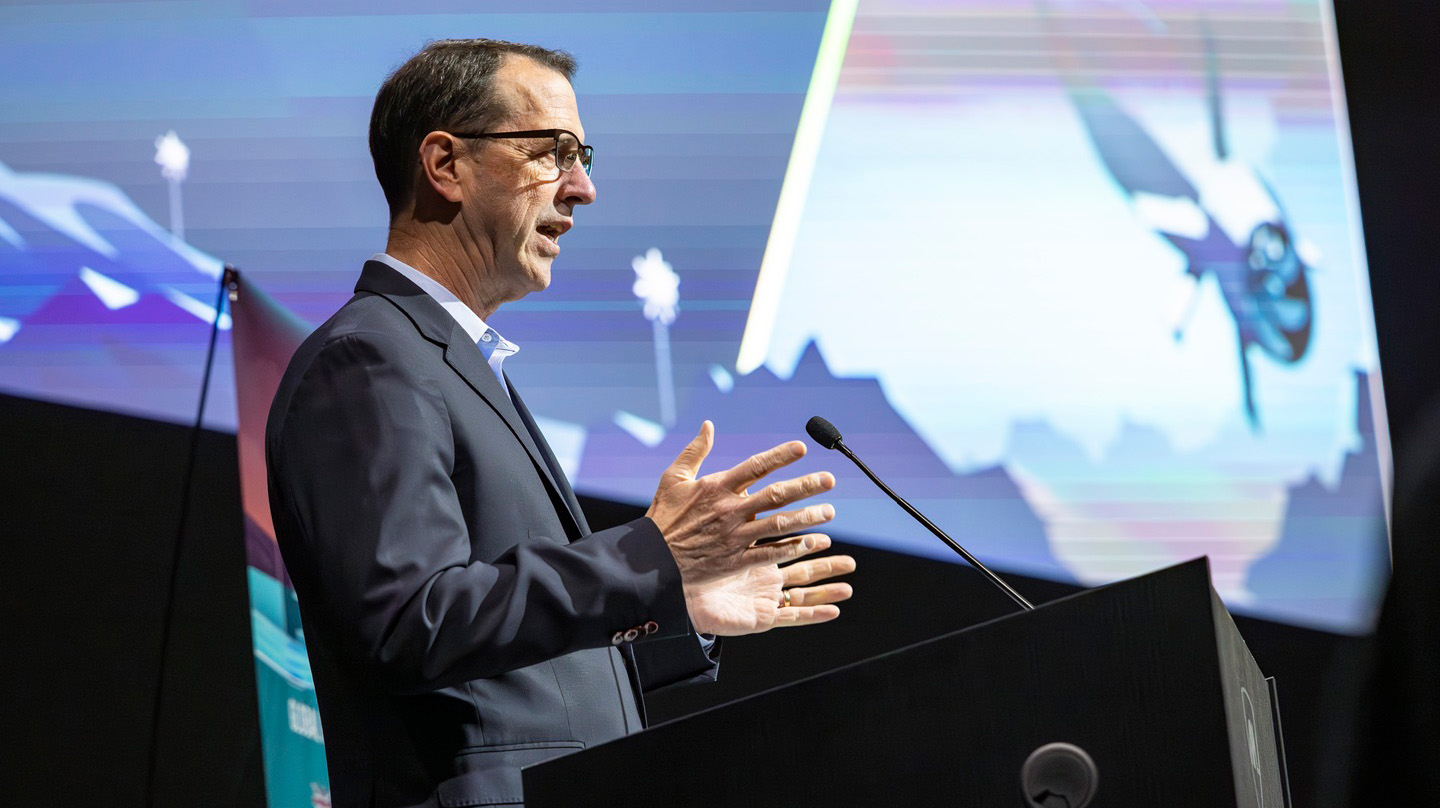
Chairman of the Naval Submarine League, Adm. John Richardson (retired), emphasizes the role of innovation in undersea technology development.
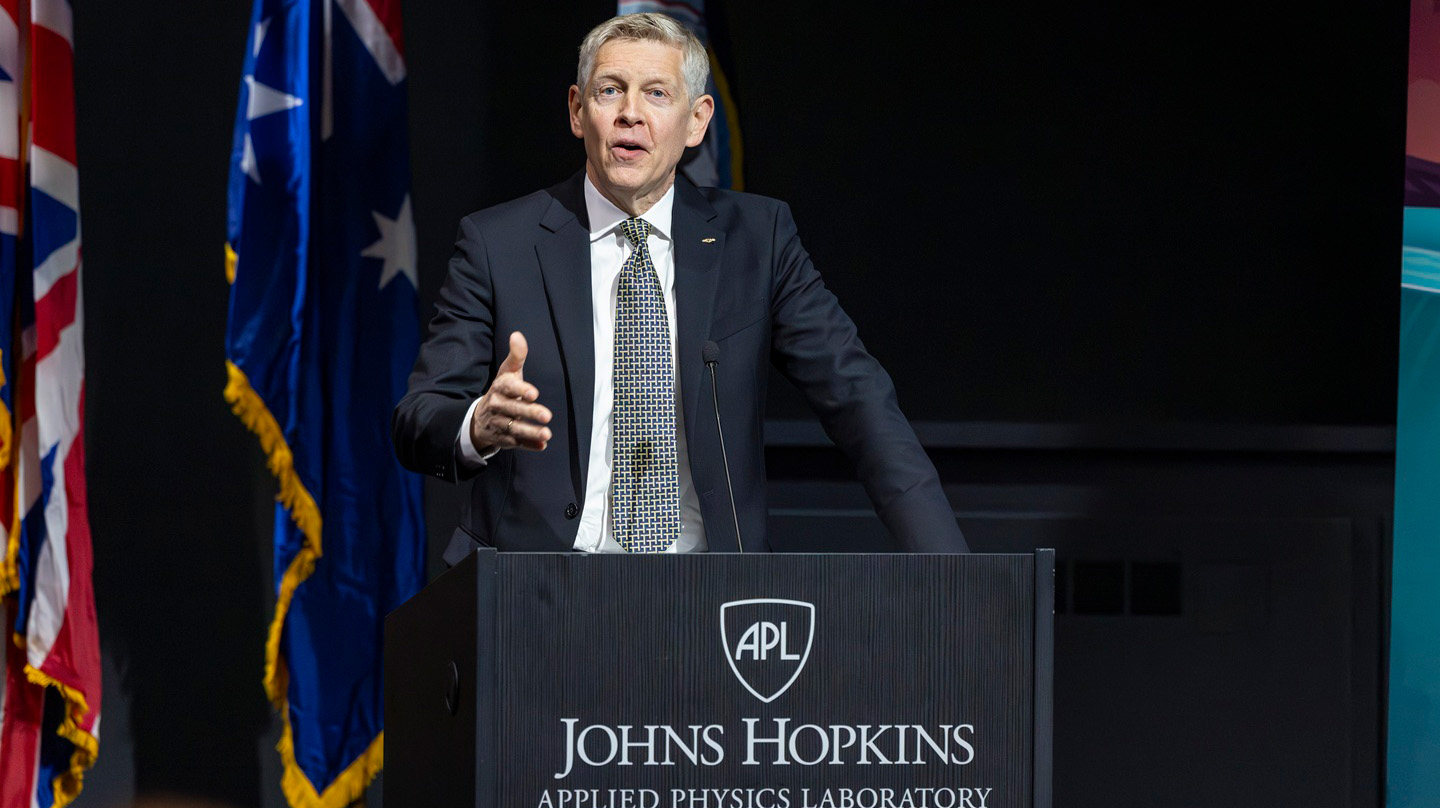
Retired Rear Adm. Lorin Selby calls the symposium to order.
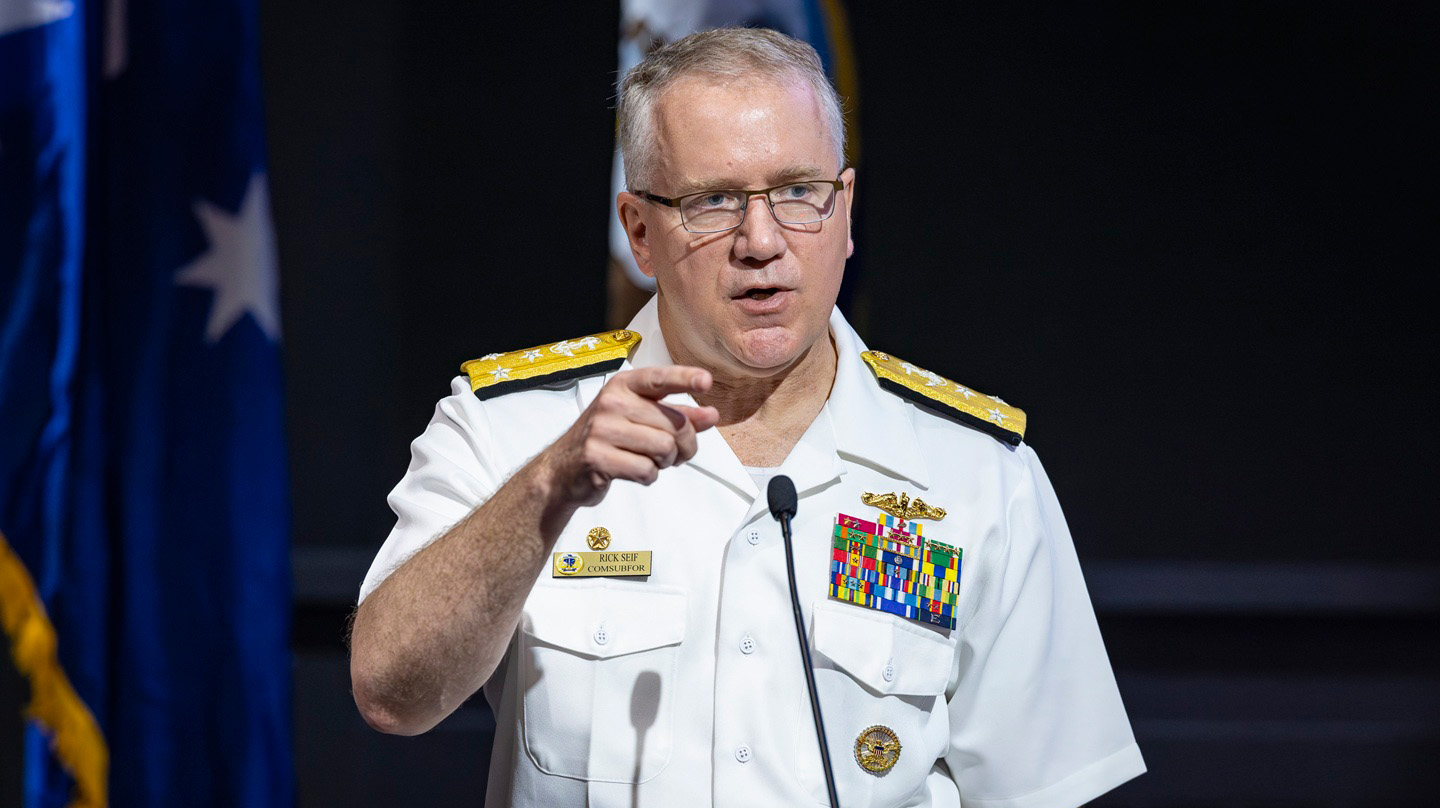
Vice Adm. Richard Seif, commander, Submarine Forces, delivers his keynote address.
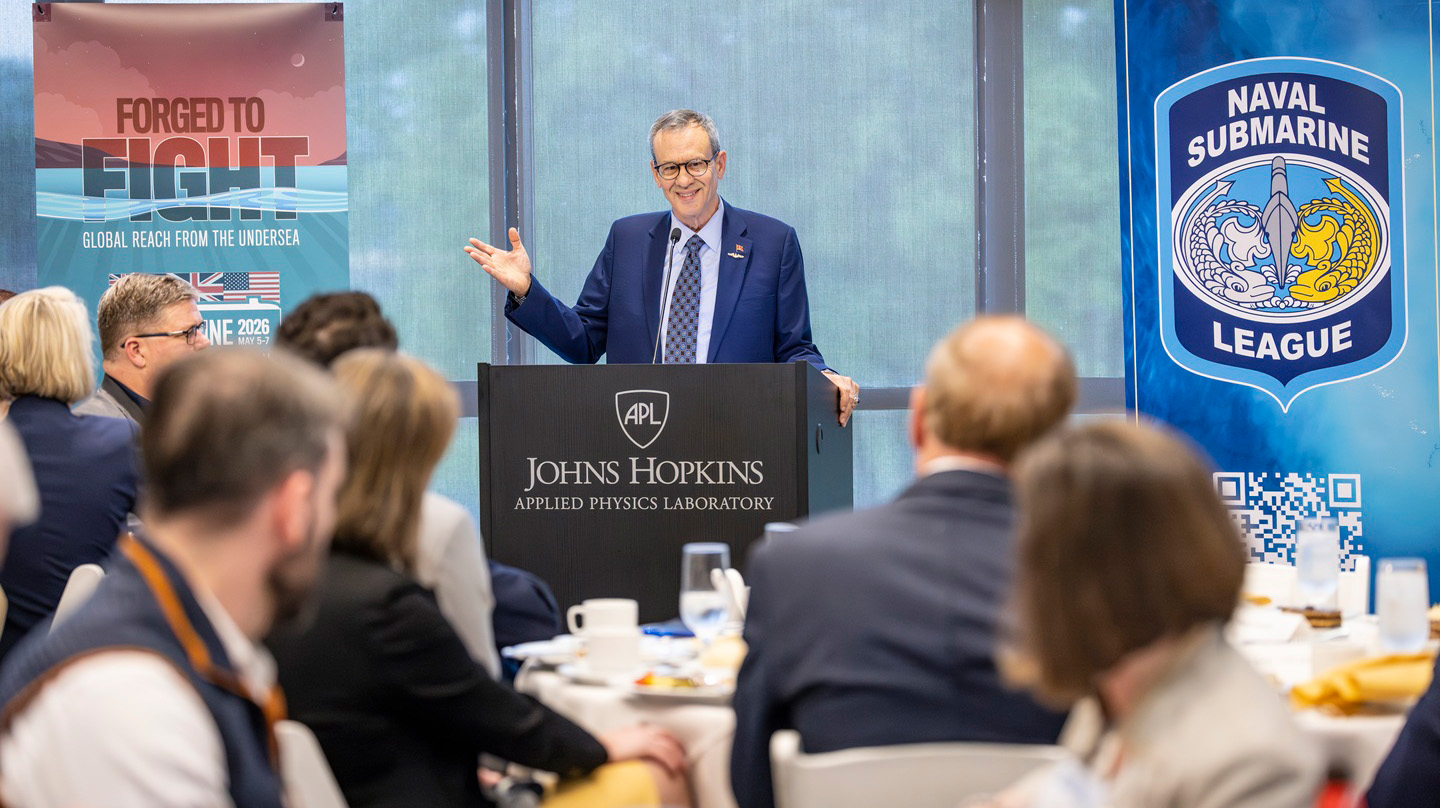
William Toti, performing the duties of undersecretary of the Navy, speaks during the symposium’s banquet.
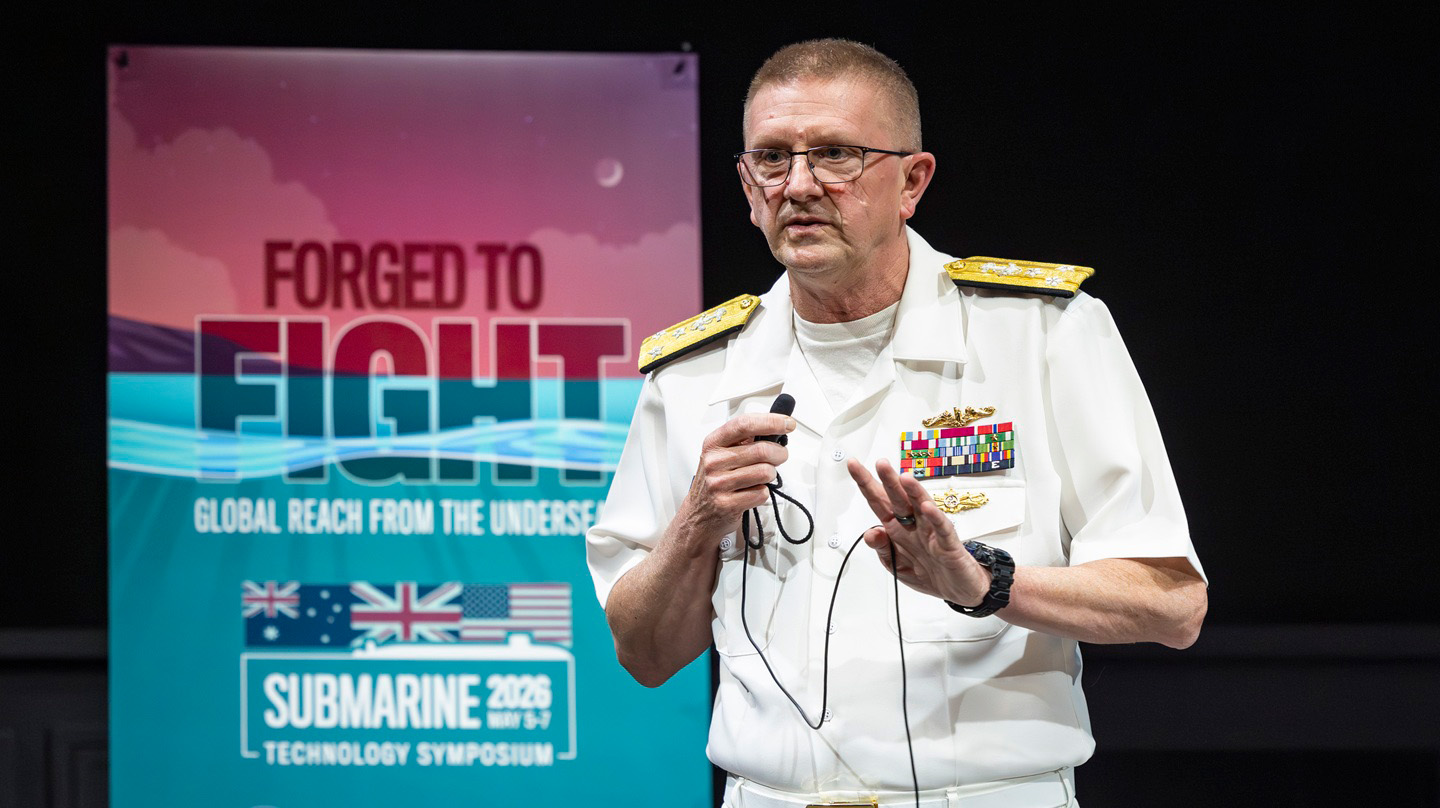
Vice Adm. Johnny Wolfe, director, Strategic Systems Programs, gives his remarks to symposium attendees in APL’s Kossiakoff Center.