News
A Pint of Hope: Developing a Shelf-Stable Blood Substitute
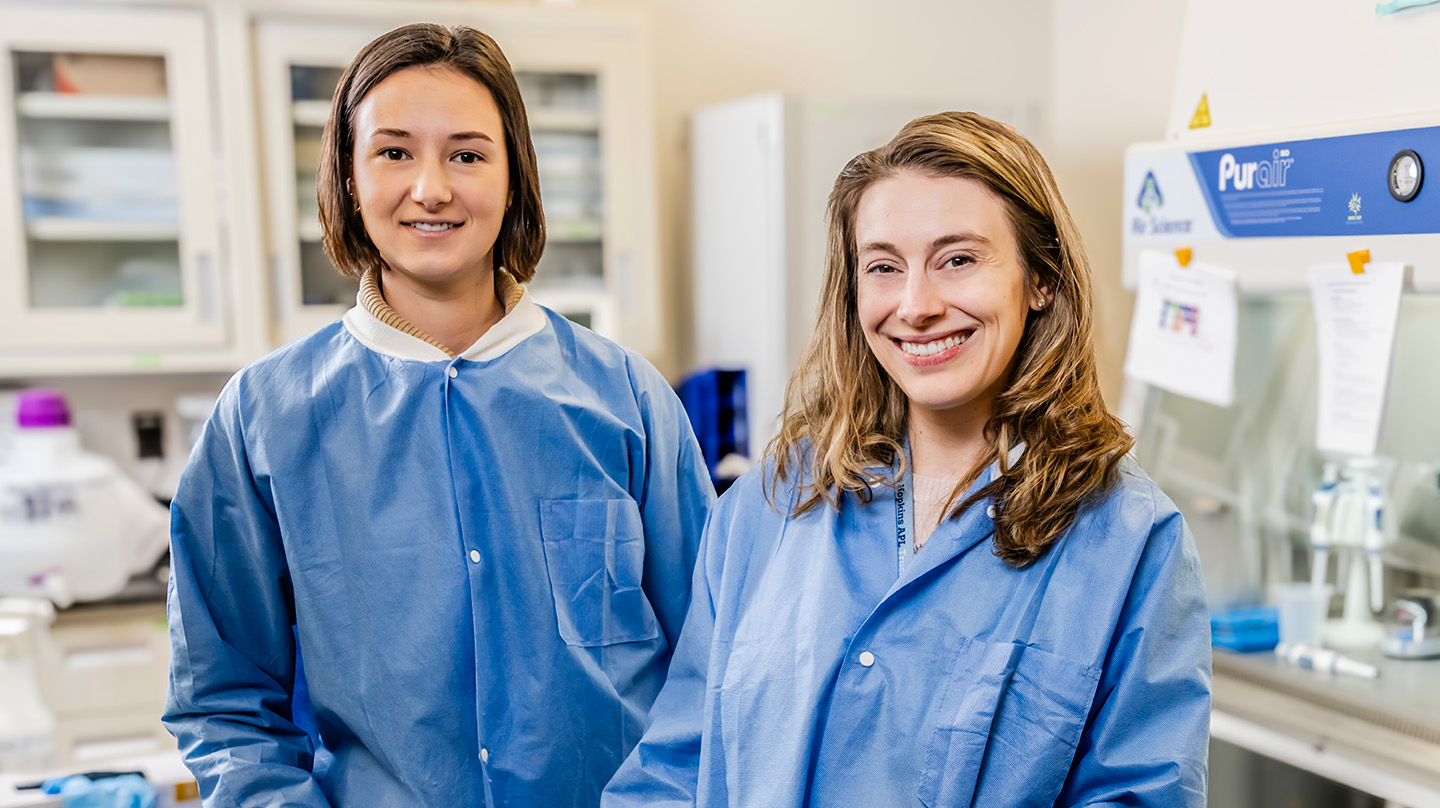
Johns Hopkins APL researchers Corrine Fuller (left) and Claire Bell are investigating the viability and scalability of freeze-dried, shelf-stable red blood cells.
Credit: Johns Hopkins APL/Craig Weiman
Audio generated using AI voice technology.
The accessibility and supply of blood is critical for trauma care and a range of life-threatening medical intervention scenarios — but what happens when someone needs blood and they’re nowhere near a blood bank?
Researchers at the Johns Hopkins Applied Physics Laboratory (APL) in Laurel, Maryland, are attacking that question with Human Erythrocytes Available for Reconstitution and Transfusion (HEART), a research initiative leveraging lab-made, stem-cell-derived red blood cells to investigate the viability and scalability of shelf-stable, lyophilized — or “freeze-dried” — red blood cells.
“We’re focusing our research around the idea that the best substitute for red blood cells is, well, red blood cells,” said Claire Bell, a senior molecular biologist at APL. “Our goal is to get there without blood donors.”
The accessibility of life-saving blood is a persistent concern for military leaders in considering care for the nation’s warfighters when they’re far from home.
“As we prepare for potential engagements anywhere in the world, a secure blood supply is a critical component of force readiness and resilience,” said Suzy Kennedy, APL’s program area manager for Warfighter Health and Readiness.
Blood Supply Challenges
From deployed military units to hospitals in rural communities or remote parts of the world, the potential for a shelf-stable and transfusion-safe blood substitute has far-reaching implications.
A pint of donated blood has a shelf life of about 42 days when stored at the right temperature, which means maintaining a supply of blood through a pipeline of continuous donations. Donors, significant medical infrastructure, and trained medical professionals are among the necessities to keep blood flowing to patients via blood banks.
In remote or austere environments, however, warfighters currently depend on walking blood banks — or their fellow troops — when there’s a need for immediate and life-saving transfusions. But even walking blood banks present logistical challenges, like requiring medical supplies, individuals trained in blood donation and transfusion, records of warfighter blood types, and infrastructure to safely store blood.
Military ships at sea, for example, may have adequate medical staff and cold storage but would constantly need to resupply blood from the warfighters onboard. And depending on the donor, providing a unit of blood can require rest and rehydration, potentially impacting the readiness of a critical team member.
But for small teams on covert orders or mass-casualty situations, maintaining a blood supply and transfusion infrastructure is untenable, potentially leaving injured service members without access to lifesaving trauma care on the front lines.
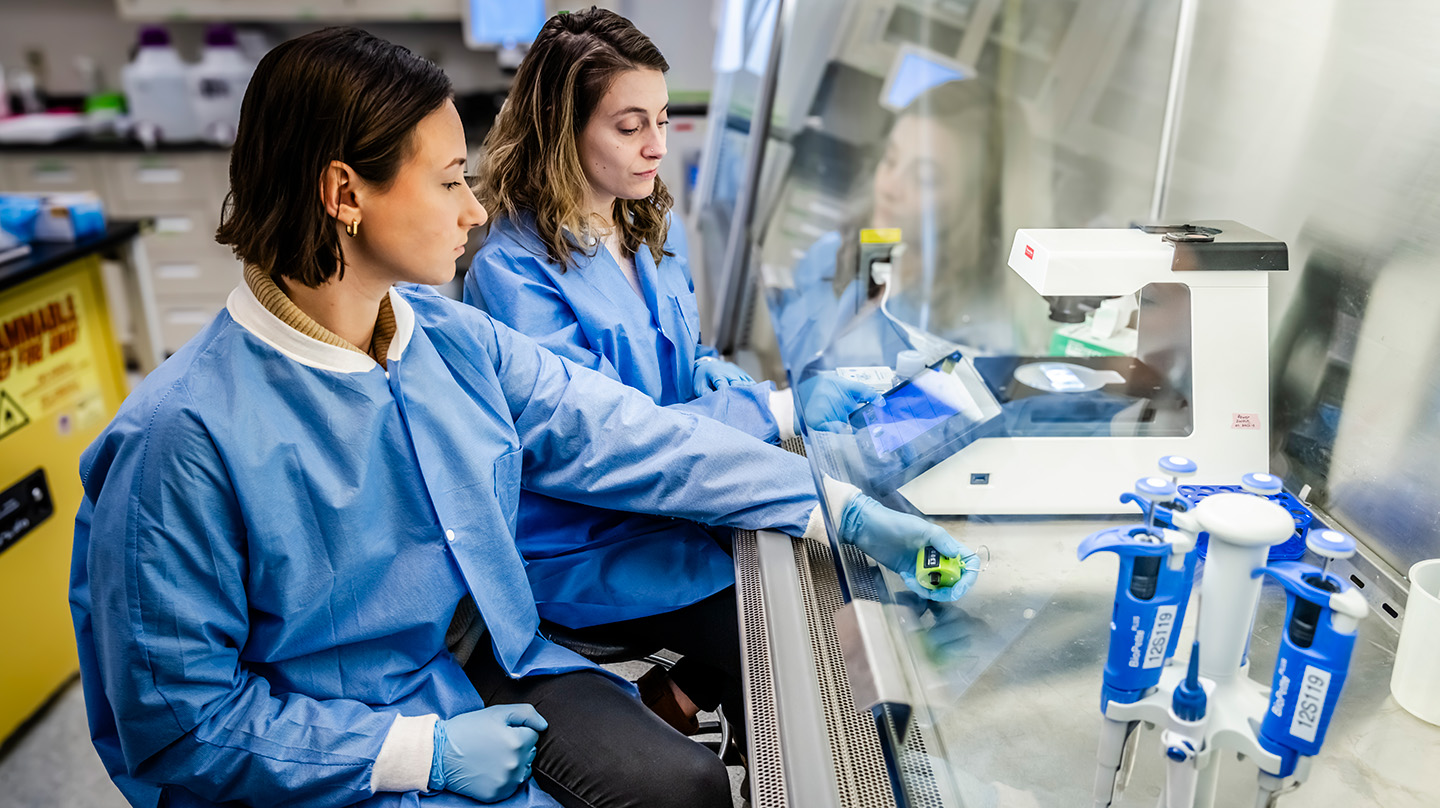
Claire Bell (right) and Corrine Fuller’s biological approach to developing a blood substitute leverages O-negative stem cells and organoids — clumps of cells that behave like an organ.
Credit: Johns Hopkins APL/Craig Weiman