News
NASA and Johns Hopkins APL Demonstrate First-of-Its-Kind Space Communications
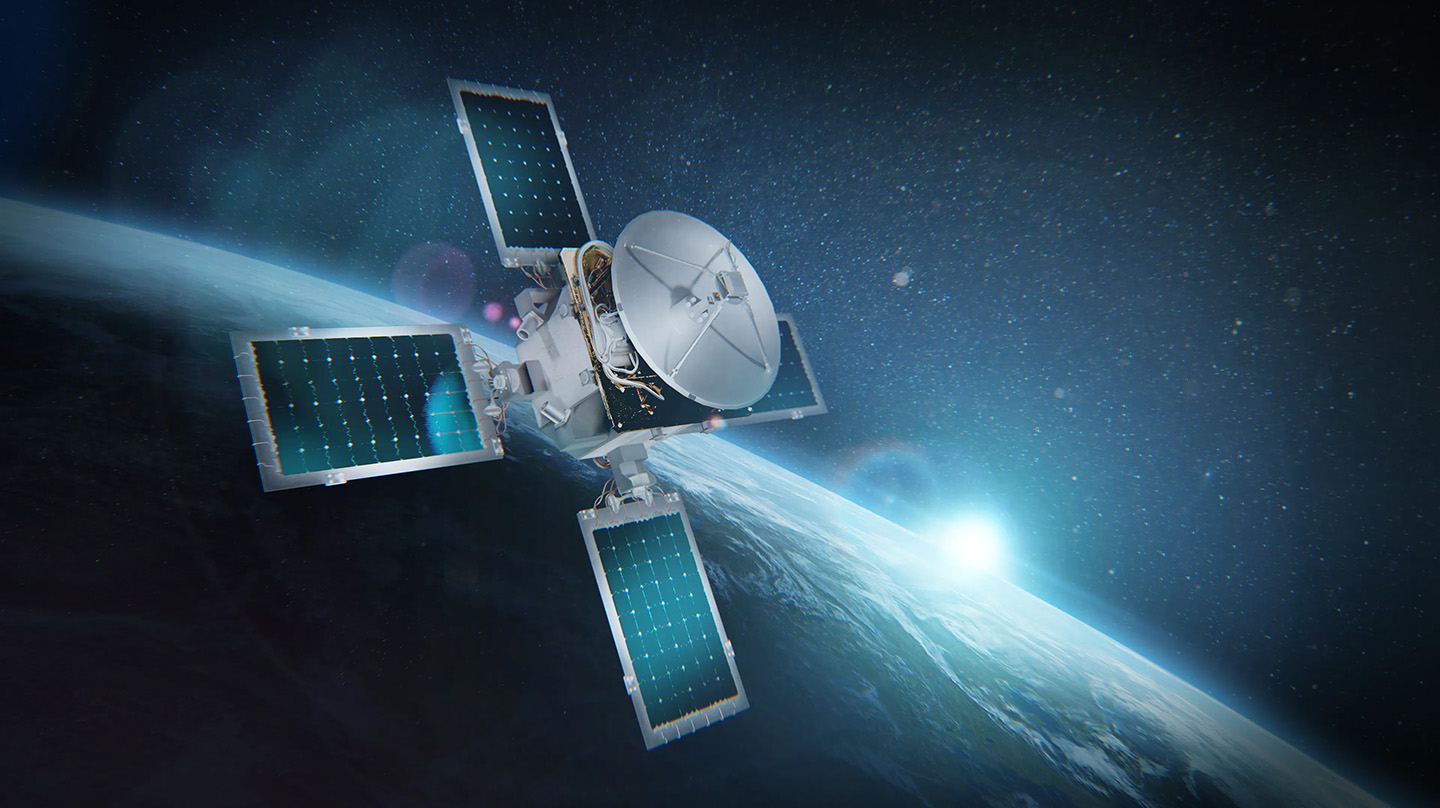
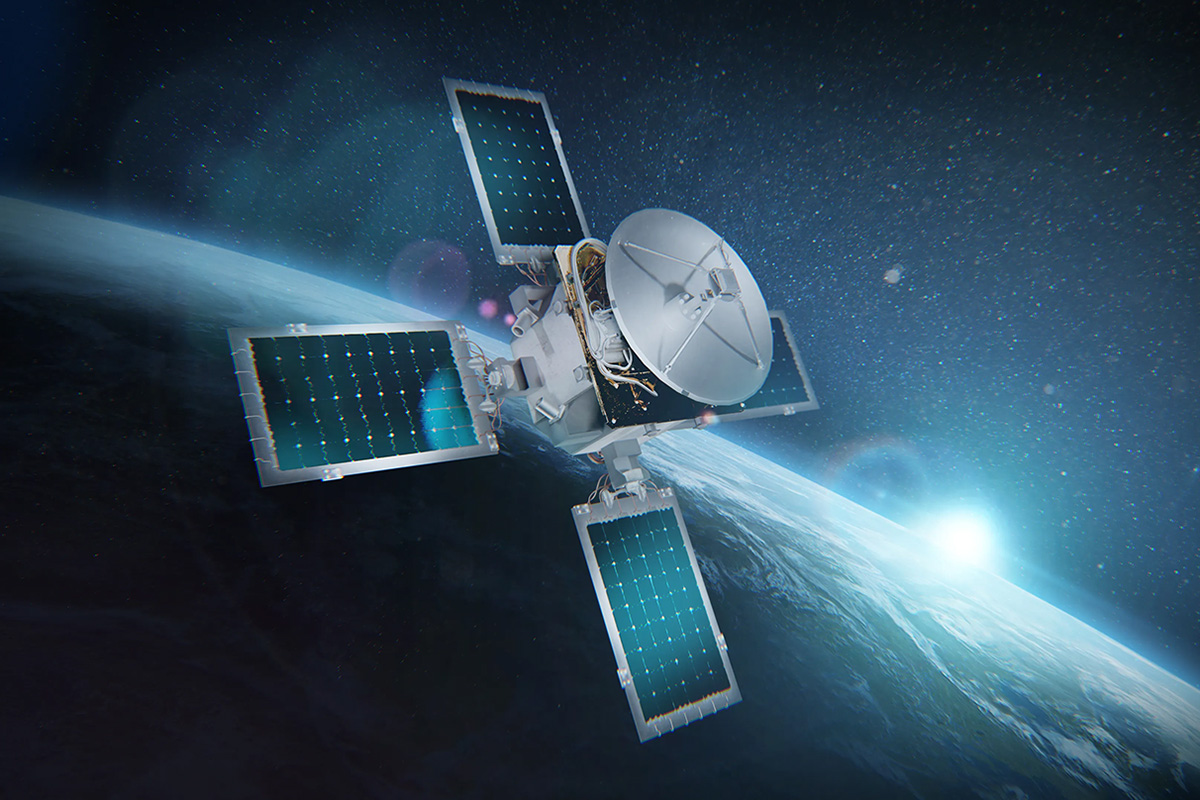
Launched July 23, PExT enhances a spacecraft’s communications subsystem, enabling mission controllers to track and exchange data more efficiently across a broad range of networks and frequencies.
Credit: NASA/Dave Ryan
Audio generated using AI voice technology.
NASA’s Space Communications and Navigation (SCaN) Program and the Johns Hopkins Applied Physics Laboratory in Laurel, Maryland, have successfully tested wideband technology that allows spacecraft to communicate with both government and commercial networks for the first time.
Launched July 23 aboard a SpaceX Falcon 9 rideshare mission, the Polylingual Experimental Terminal (PExT) is demonstrating multilingual wideband terminal technology. Hosted on a satellite from York Space Systems, PExT enhances a spacecraft’s communications subsystem, enabling mission controllers to track and exchange data more efficiently across a broad range of networks and frequencies.
“This demonstration marks a historic step forward in modernizing space communications,” said Bobby Braun, head of APL’s Space Exploration Sector. “PExT serves as another example of how APL’s pedigree in space technology can significantly benefit NASA and our nation.”
Blending Pop Culture, Science, and Technology
PExT works similarly to cellular network technology, where a phone has a primary wireless network but can roam to networks managed by other companies without interruption. NASA and APL aim to provide a comparable framework, allowing spacecraft equipped with the terminal flying in low Earth orbit to connect seamlessly to relay satellites running on commercial and government networks.
During the demonstration, the terminal established connections with NASA’s TDRS (Tracking and Data Relay Satellite) fleet and multiple commercial networks to showcase its capabilities. In a nod to pop culture, engineers also demonstrated low-latency and high-data-rate communications by playing the video game DOOM and the Rick Astley music video that spawned the popular “rickroll” meme in real time on the terminal.
“This demonstration brings unprecedented capability to new space missions by enabling communications that are untethered from the constraints of individual service providers and enabled by multilingual access to hybrid networks,” said Chris Haskins, principal investigator for PExT at APL. “It also shows how government, academia, and industry can partner effectively to develop and demonstrate groundbreaking and critical space capabilities.”
PExT advances NASA’s goals for how spacecraft will communicate while in low Earth orbit. In the future, this technology could expand to cislunar space, the region between Earth’s geosynchronous orbit and the Moon, as well as the Earth-Moon Lagrange points. Because of the flexible capabilities of wideband technology and the innovative nature of the mission, NASA has extended the PExT demonstration for an additional 12 months. Extended mission operations will include new direct-to-Earth tests with the Swedish Space Corporation, scheduled to begin in early 2026.
The PExT team is working with commercial industry to transition wideband technology and the PExT terminal to the broader space community, similar to APL’s transfer of the Frontier Radio, a software-defined radio used on multiple space missions before being licensed to Rocket Lab USA in 2021 for commercial use.
For decades, NASA’s TDRS constellation has ensured reliable communications between spacecraft in orbit and scientists and engineers on the ground. By 2031, NASA will transition near-Earth communications services for robotic science missions from government-owned to commercially sourced infrastructure.
Related Mission