News
NASA’s Dragonfly Clears Key Tests as Titan Rotorcraft Takes Shape
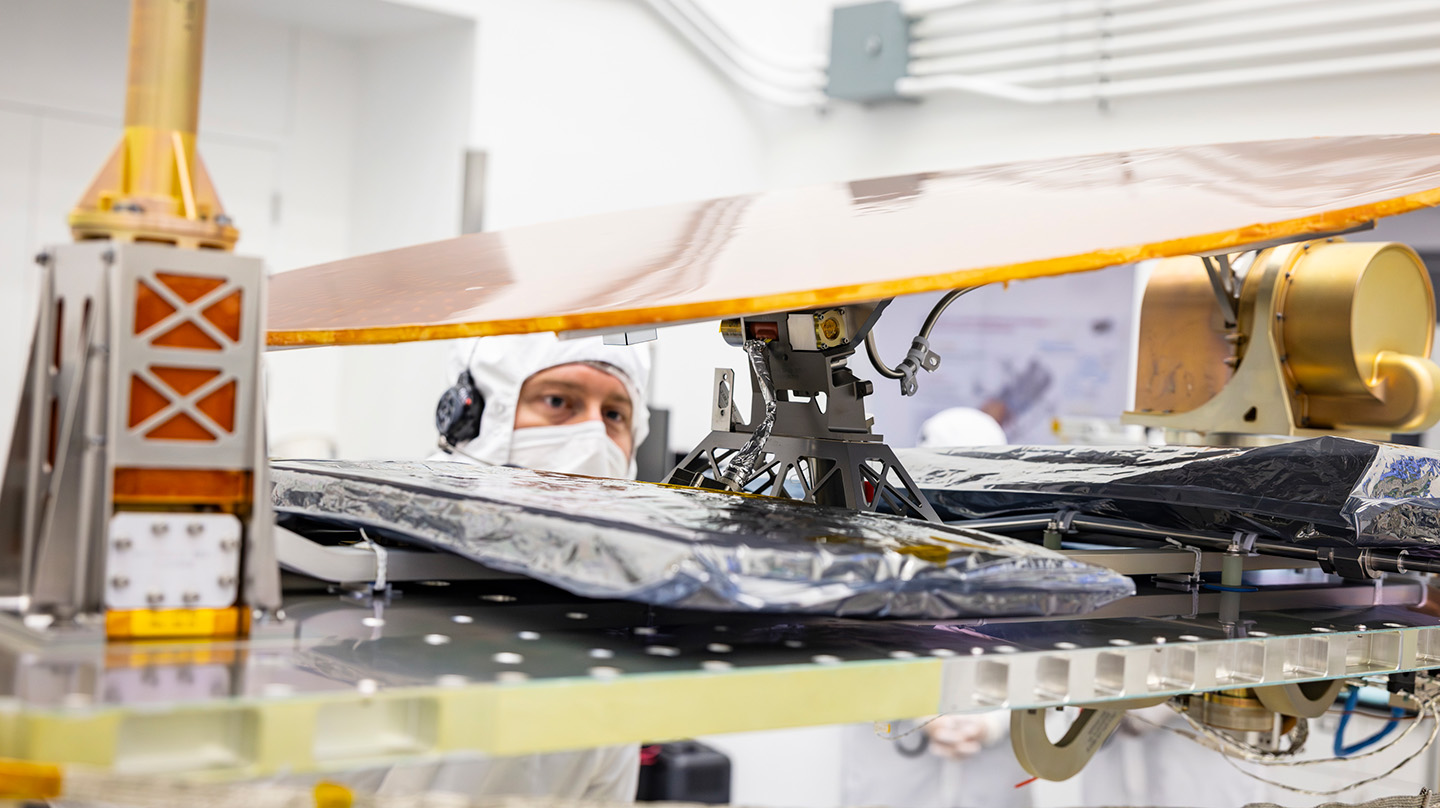
APL engineer Jackson Banbury inspects the motorized arm that attaches Dragonfly’s high-gain antenna to the spacecraft body. The arm will raise the antenna when Dragonfly is stationary and lower it into a locking mechanism before each flight.
Credit: NASA/Johns Hopkins APL/Ed Whitman
Audio generated using AI voice technology.
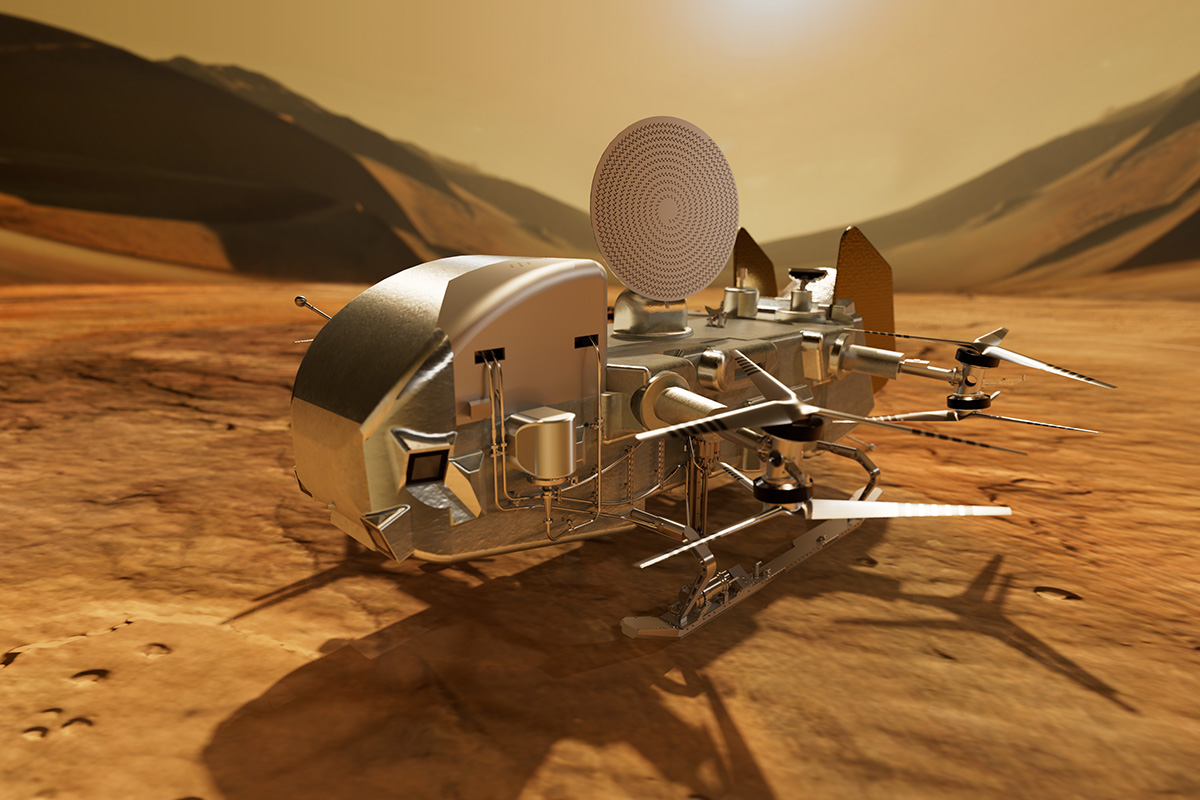
NASA’s Dragonfly is starting to look less like a collection of spacecraft parts and more like the rotorcraft that will fly across the surface of Titan, Saturn’s hazy moon.
The mission reached a major milestone on June 29, when the Dragonfly team at the Johns Hopkins Applied Physics Laboratory (APL) in Laurel, Maryland, delivered the nearly 13-foot-long fuselage for the next phase of spacecraft integration ahead of schedule. The delivery followed a roughly monthlong process of structural testing of the lander frame assembly, which carried many of the features that give the Dragonfly rotorcraft its unmistakable shape — including its landing skids, the cap for the spacecraft’s power source, and the arms that will eventually hold its eight sets of rotors.
“It was pretty awesome to see the lander, as we designed it, become real,” said Hunter Reeling, Dragonfly thermal-mechanical integration and test lead from APL.
With structural testing complete and the fuselage delivered, the team started integrating the mechanical, thermal, and electrical systems on July 1, kicking off the process that will turn the lander into the flying science lab it’s meant to be.
Throughout the month, they’ll populate Dragonfly’s fuselage with the flight bulkheads, as well as the wiring harness, cables, and connectors — the electrical “nervous system” that ties Dragonfly’s systems together. Electronics boxes, avionics, and science instruments will follow as mission partners across the country complete their own assembly and test campaigns.
“From here, it’s about populating that structure with electronics boxes, instruments, wiring, insulation — everything that will enable its mission,” Reeling said. “It’s all about getting Dragonfly ready to launch.”
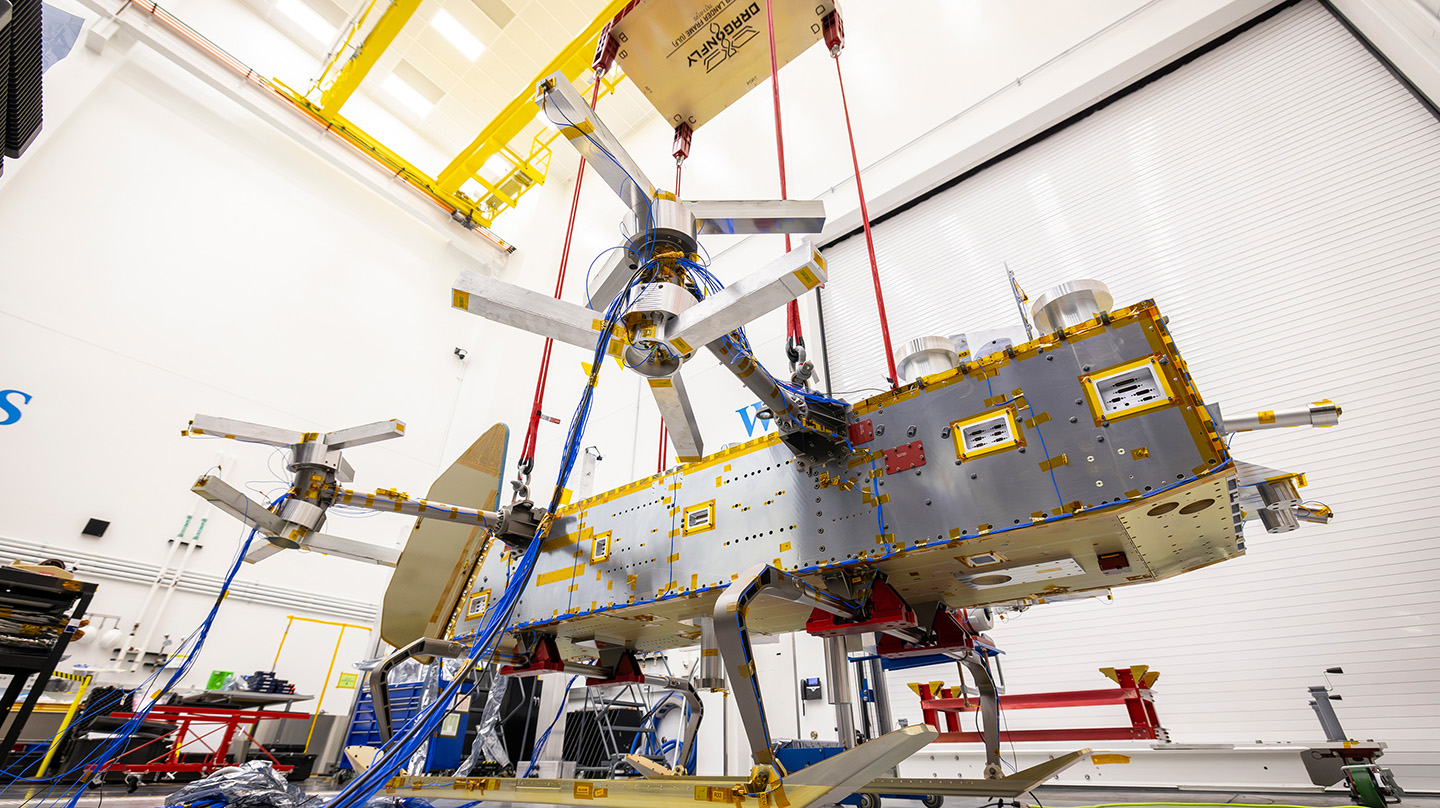
Suspended by four bungee cords, the Dragonfly structure is positioned inches above the floor during ground vibration tests in one of APL’s clean rooms. These tests give engineers the opportunity to see how vibrations in Dragonfly’s rotors may resonate across the lander’s main body, potentially interfering with other equipment.
Credit: NASA/Johns Hopkins APL/Ed Whitman
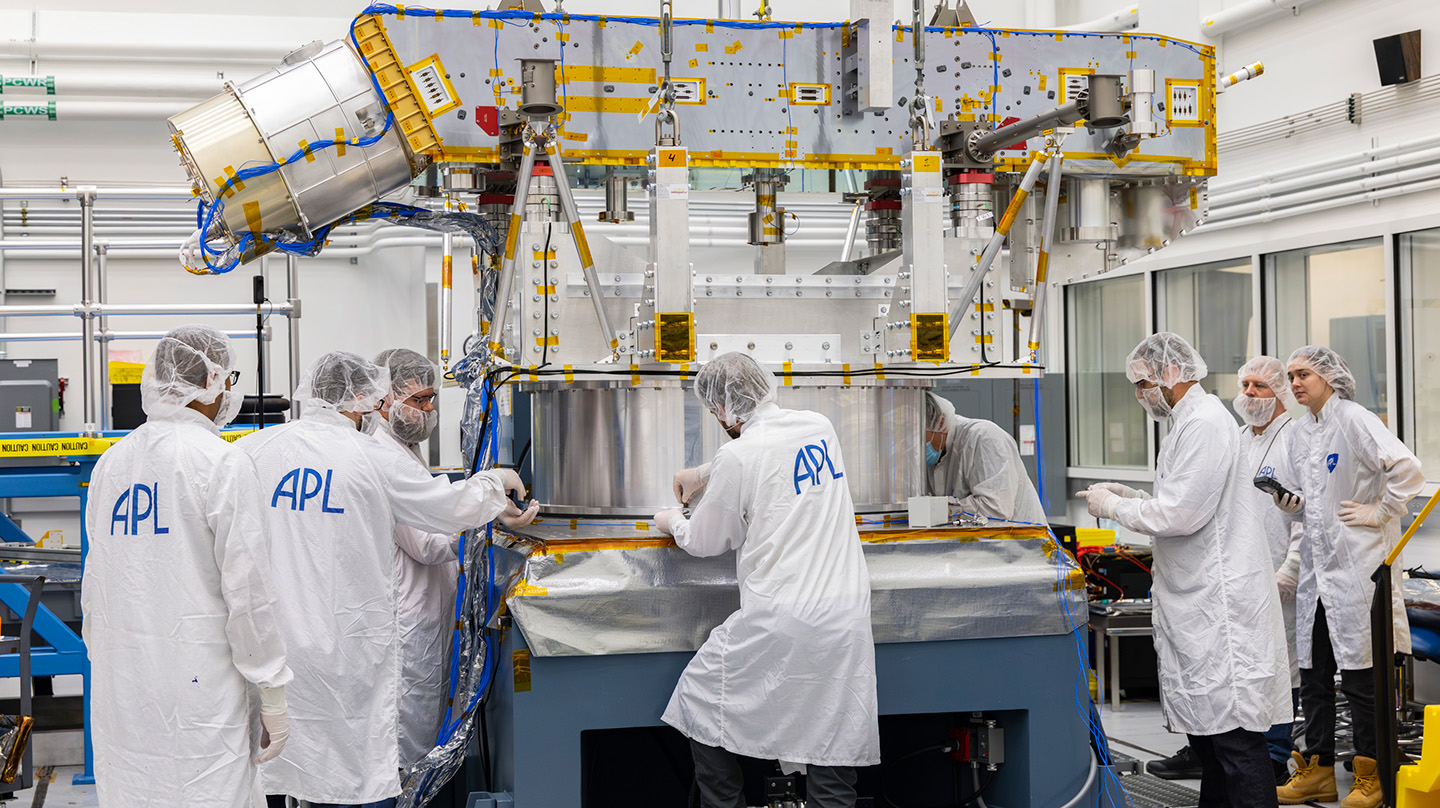
Engineers mount the inverted Dragonfly structure to a vibration table at APL’s vibration test facility. Vibration tests expose the lander structure to a systematic series of tests that ensure it can hold up to the forces it will experience during launch, entry into Titan’s atmosphere, and landing on the surface of this ocean world.
Credit: NASA/Johns Hopkins APL/Ed Whitman
Related Mission