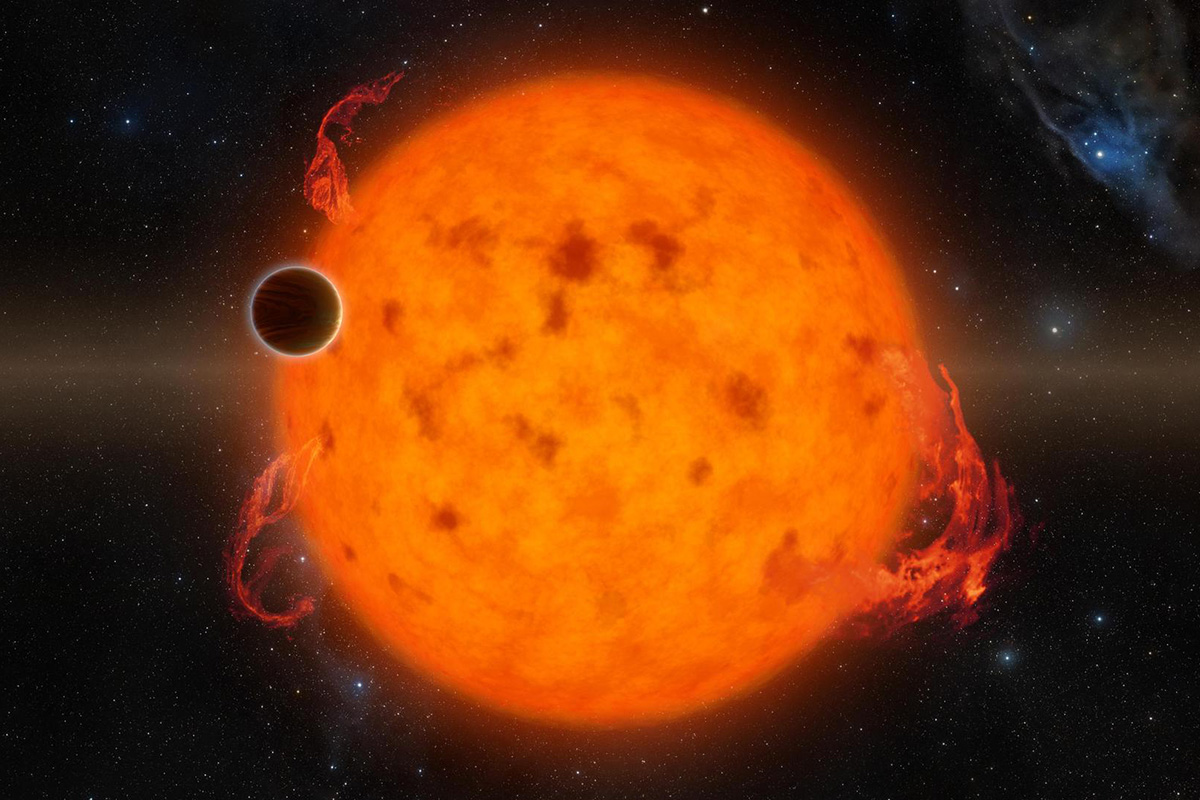
Astrophysics and Exoplanets
Extending Our Reach Into the Cosmos
Leveraging key institutional technologies and NASA programs, including the planetary mission New Horizons, space researchers at Johns Hopkins APL are investigating exoplanets, stellar phenomena, and cosmic conundrums that are refining our picture of the universe and could even reveal the first signs of life beyond Earth.
APL is home to the Consortium on Habitability and Atmospheres of M-dwarf Planets (CHAMPs), an interdisciplinary research group backed by NASA’s Interdisciplinary Consortia for Astrobiology Research (ICAR) program that is leading the way to isolate the observational methods and planetary characteristics that will best reveal the habitability of rocky exoplanets orbiting the most abundant stars in our galaxy: red M-dwarf stars. Our researchers have been awarded thousands of hours of observation time with NASA’s space telescopes — including the single largest time allocation ever awarded to exoplanet research in the James Webb Space Telescope’s Guest Observers program — in the hunt for a universal “cosmic shoreline” between exoplanets that do and don’t have atmospheres and identify the spectral signatures of molecules in those atmospheres that could indicate or preclude the presence of life.
Looking beyond the Milky Way Galaxy, our researchers are developing new observational methods to better understand the nuclear processes that govern Type Ia supernovas — the brightest stellar explosions in the cosmos — and have repurposed the LORRI instrument on NASA’s New Horizons to answer the cosmic mystery of just how dark space actually is. The teams are leveraging the lab’s decades of spaceflight experience so scientists can actively pursue the development of instruments and missions that will transform science, including a gamma-ray telescope to operate from lunar orbit. They also built and managed NASA’s GUSTO balloon mission, which provided the first comprehensive study of the interstellar medium by examining everything from the formation of stellar nurseries to the eventual destruction of stars.
Featured Science Snapshots
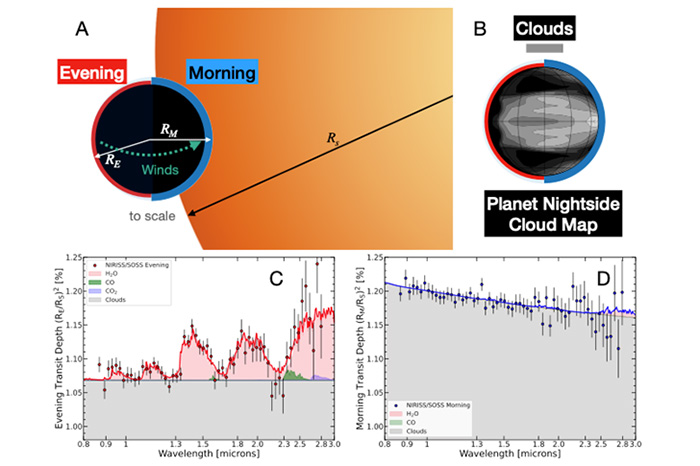
James Webb Space Telescope Separates an Exoplanet’s Clear Dusk from Cloudy Dawn
The James Webb Space Telescope split a hot Jupiter’s atmosphere in two, revealing morning clouds, clear evening skies, and a hidden asymmetry that skews our view of planet chemistry.
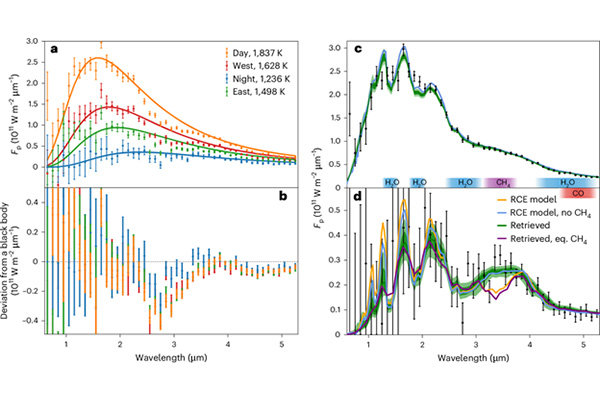
James Webb Space Telescope Catches Hot Jupiter Winds Rewriting Nightside Chemistry
APL-led data analysis reveals that winds erase nightside methane on a hot Jupiter, showing how fast circulation can drive atmospheric chemistry.
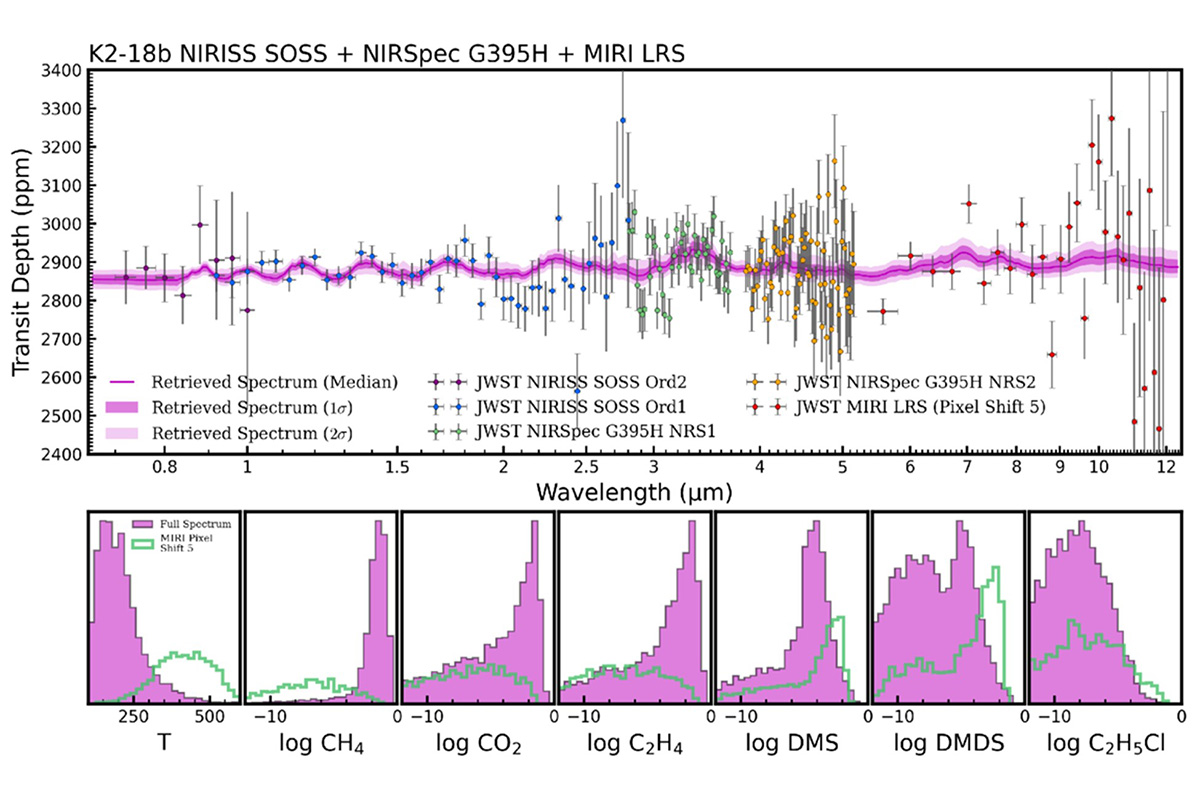
Study Challenges Life Claims on K2-18b
This APL-led study reanalyzes James Webb Space Telescope data and finds no statistically significant biosignatures on K2-18b, sharpening standards for life detection beyond Earth.
Missions, Instruments, and Initiatives

Balloon Programs Interstellar Medium
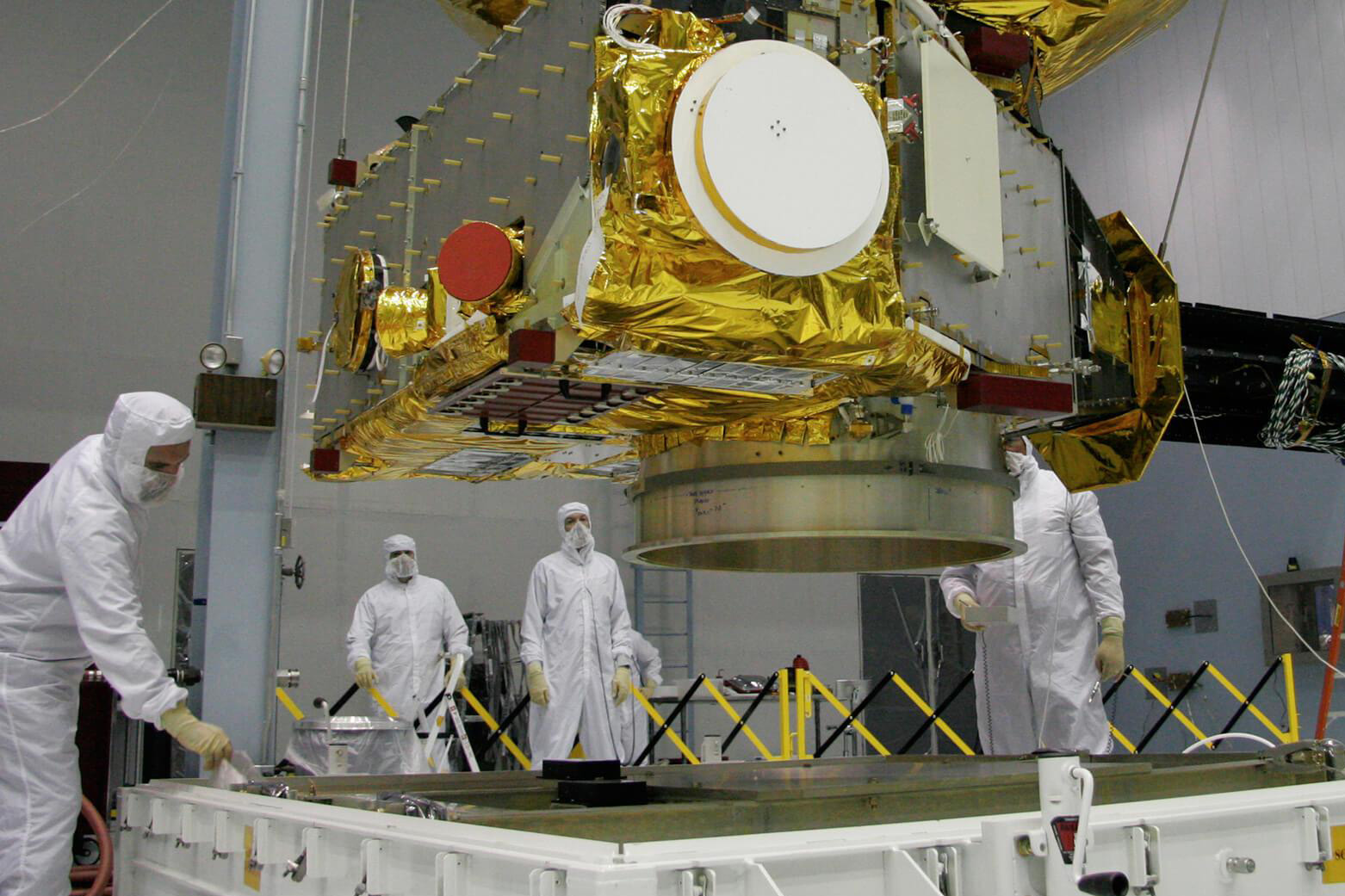
LORRI Pluto, Kuiper Belt Objects, and Comets
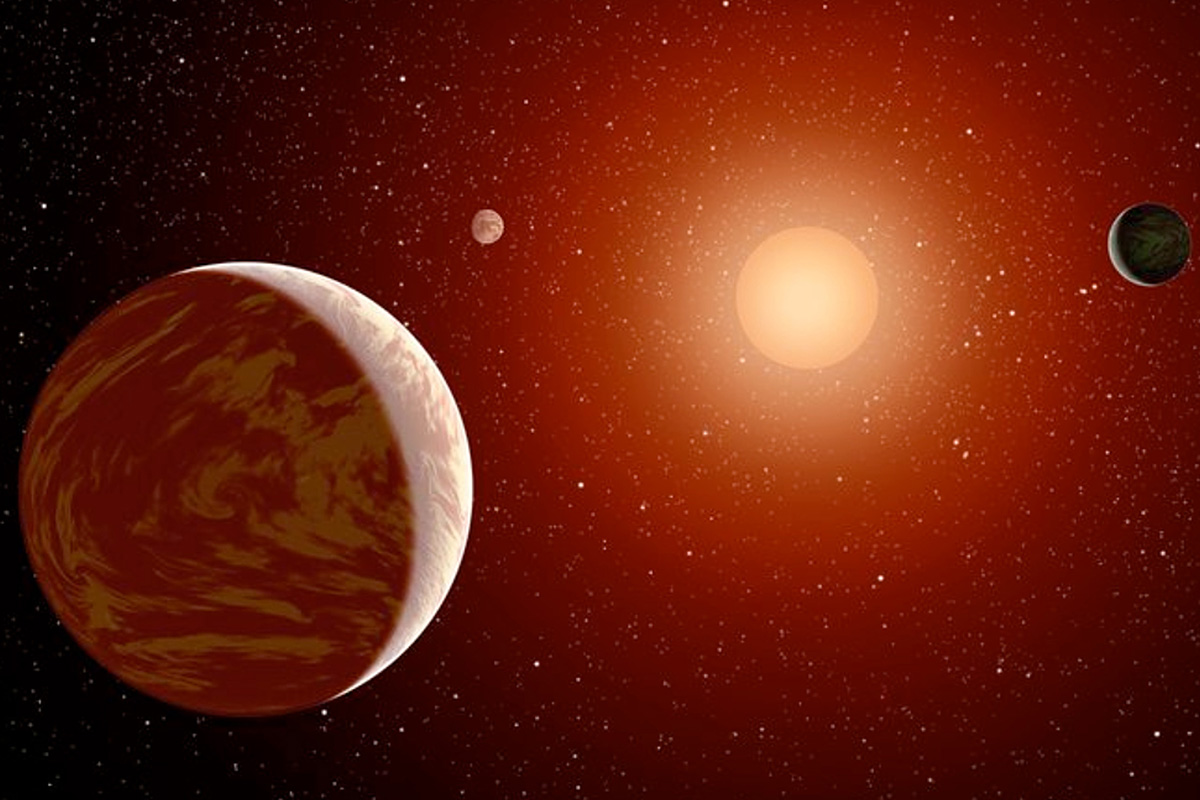
Consortium on Habitability and Atmospheres of M-dwarf Planets Interstellar Medium
Featured Experts

Kevin Stevenson Astronomer
Learn more about Kevin Stevenson
Erin May Exoplanet Astronomer
Learn more about Erin May
Jacob Lustig-Yaeger Exoplanet Astronomer; Astrobiologist
Learn more about Jacob Lustig-YaegerConnect With Us
APL meets critical national challenges through the innovative application of science and technology. Our experts can provide the perspective and analysis reporters need to cover the news. Contact us to get connected or request permission to use images or videos.
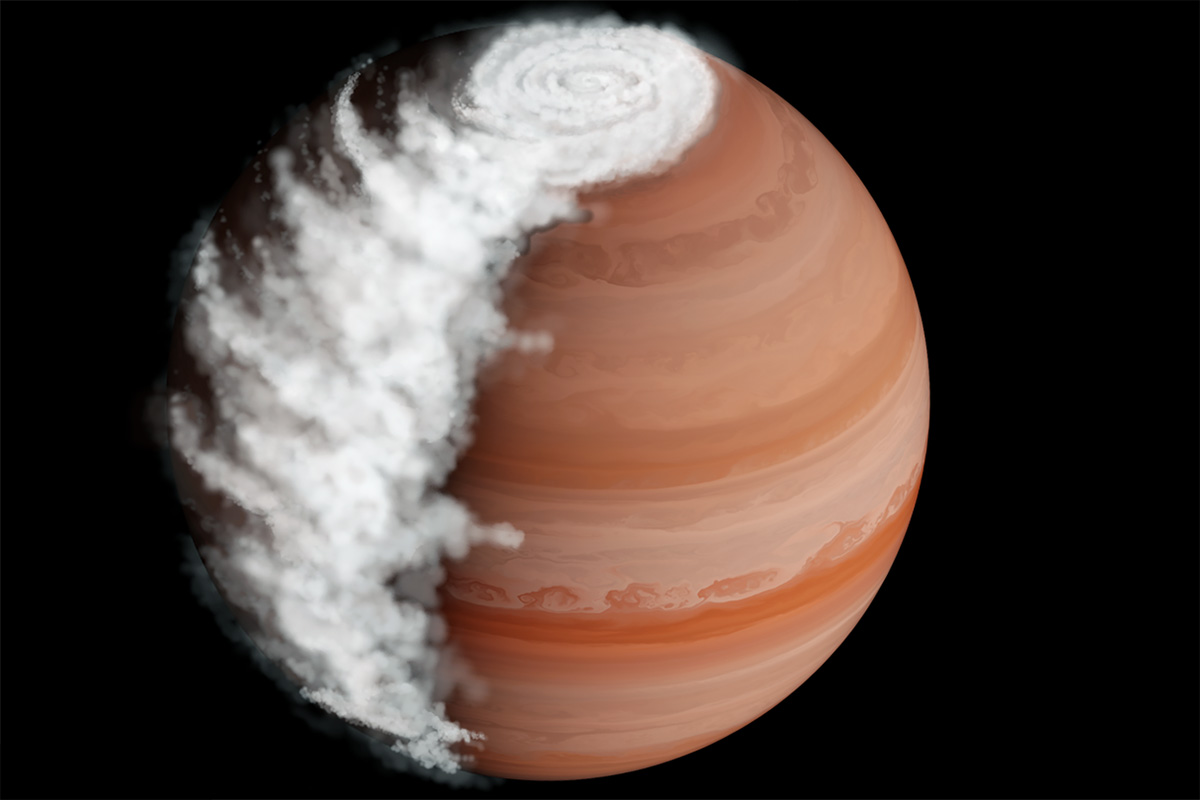
Astronomers De-Fog Exoplanet Atmospheres With New Cloud-Detecting Method The Hub // May 21, 2026
Keep Exploring

Astrobiology
At its core, astrobiology seeks to answer profound questions about our place in the universe. APL has made key contributions to understanding habitability in the solar system and beyond.